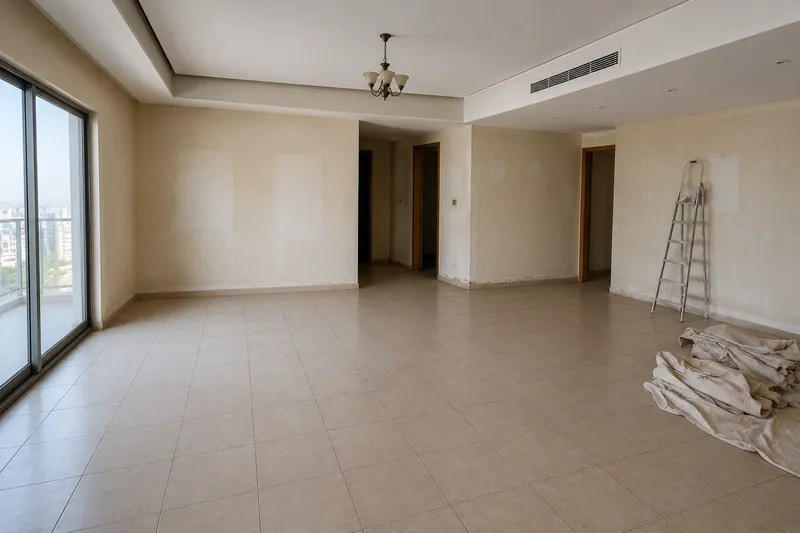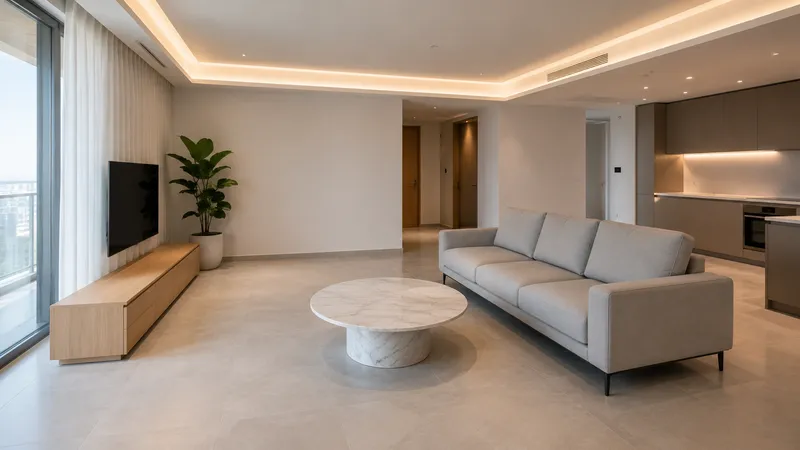

How far back you strip
Taking a villa back to shell costs far more in labour and disposal than replacing finishes selectively.
Published on 31 Jul 2026 · 6 min read
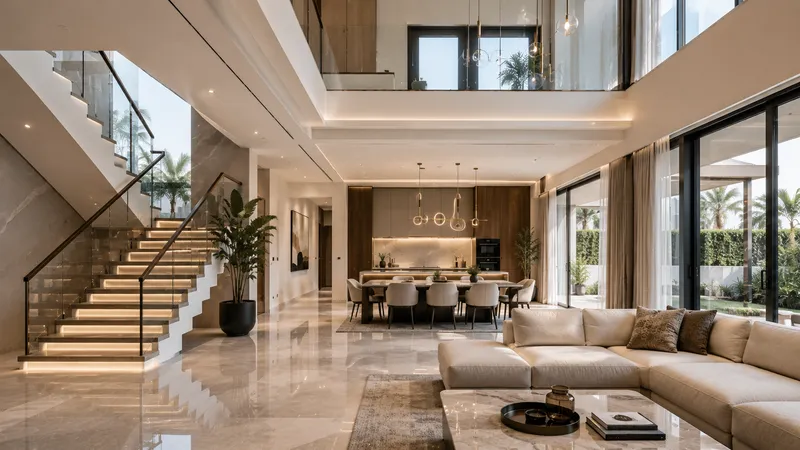
Budgeting guide
Most villa budgets in Dubai are built on apartment logic — a rate per square foot, scaled up. It rarely survives contact with the site.
A villa carries more of everything: more floors, more bathrooms, longer service runs, an external envelope and a community with its own rules. This guide covers what genuinely drives the cost, what tends to be discovered late, and how to plan the whole project rather than the first stage of it.
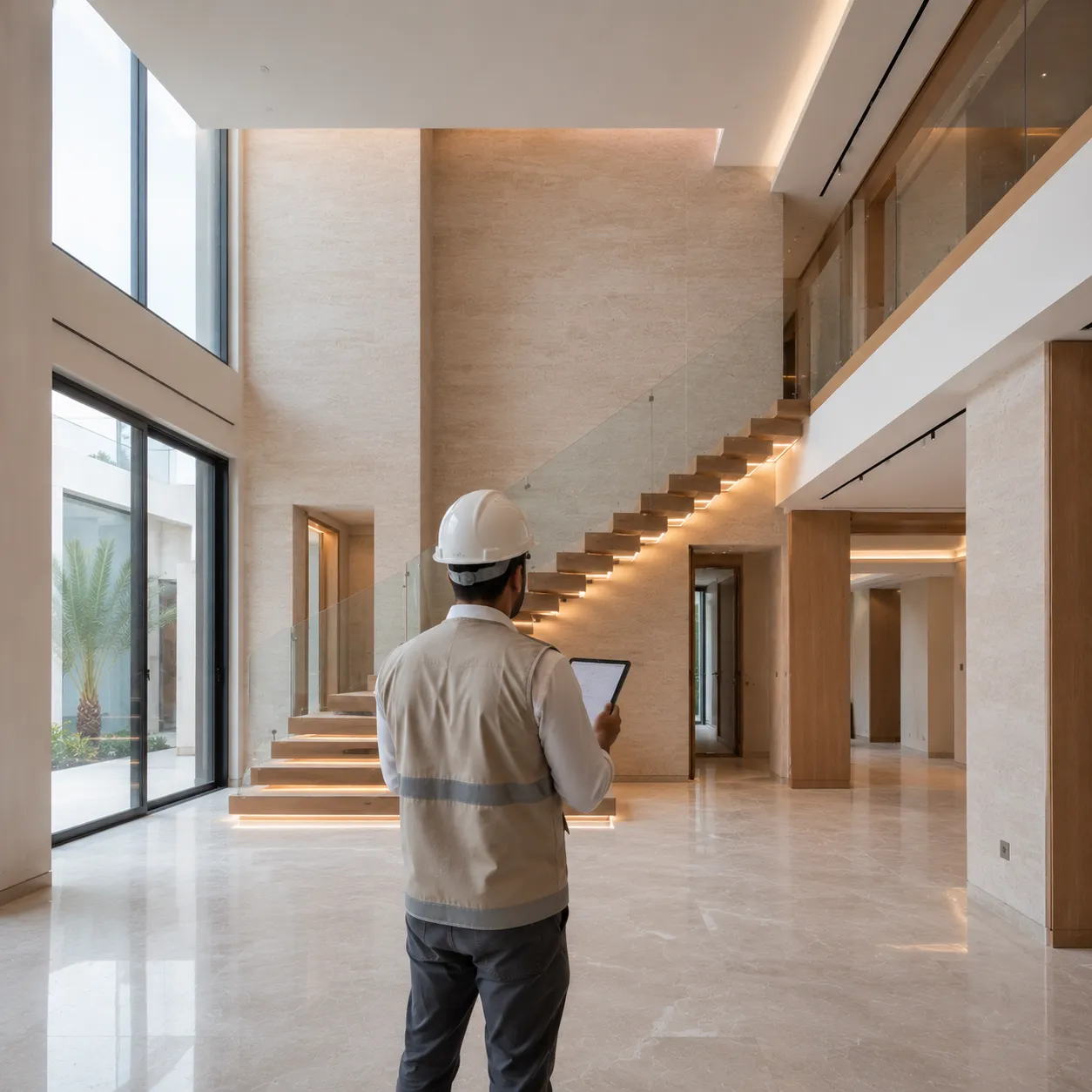
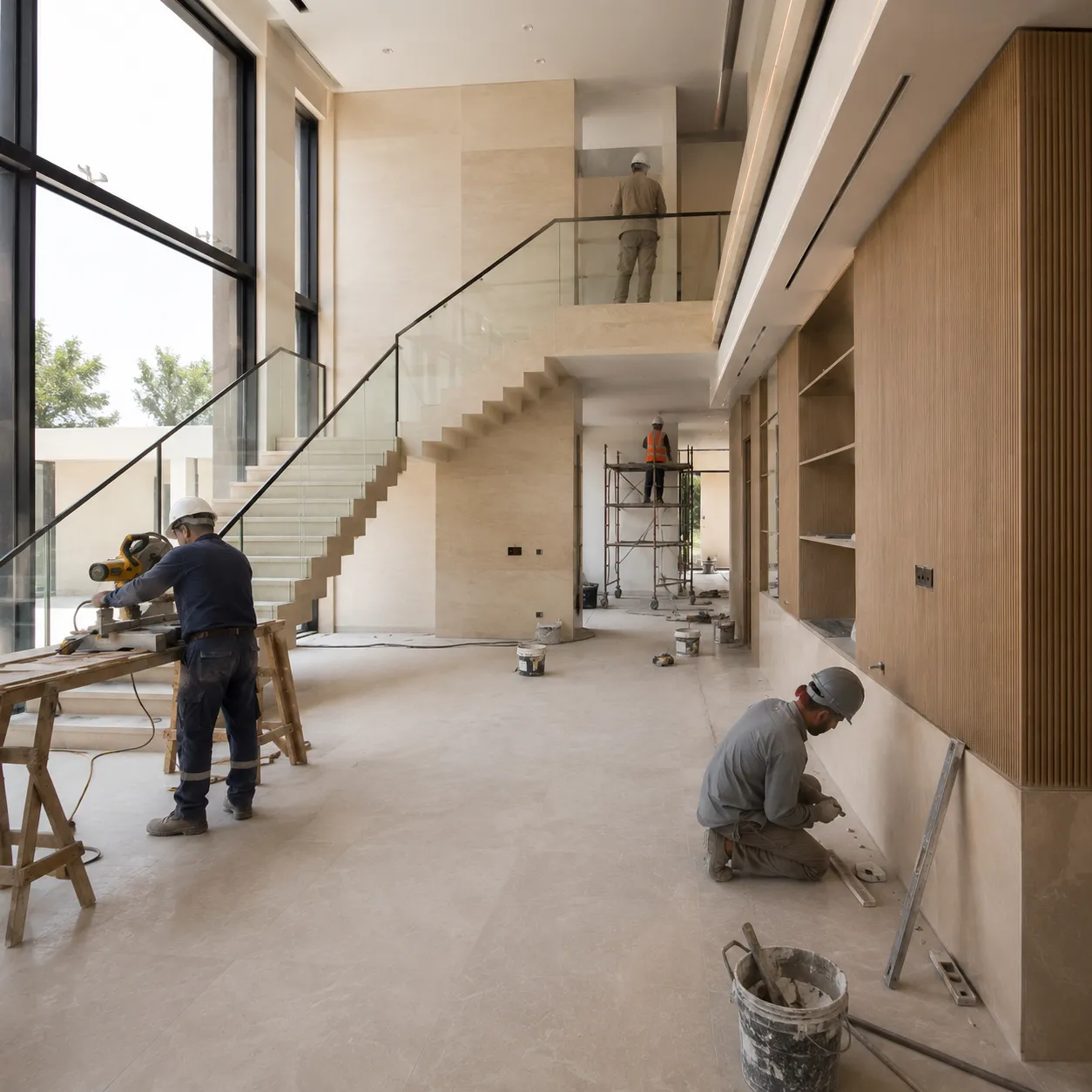
In an apartment, trades queue. In a villa they overlap — two floors, several wet areas and a joinery package that runs into far more linear metres than owners expect.
There is also an outside. An envelope that has been in the sun for years, and a community that decides your working hours, your access and where your debris can go.
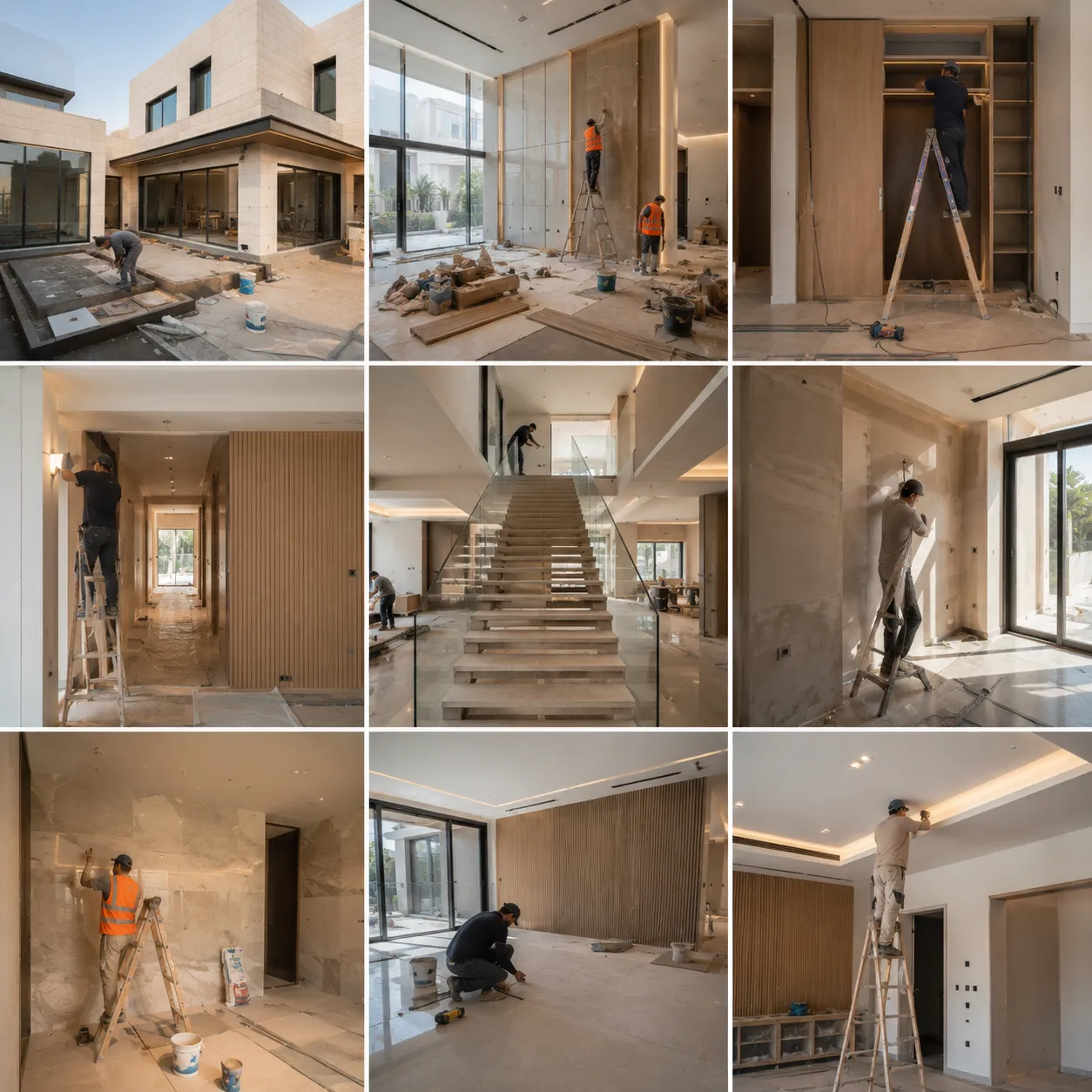
Two villas of identical size can differ enormously once you compare how many bathrooms are being rebuilt, how much of the electrical layout is changing and what the roof and external walls have been through.
Area sets the quantity of a few trades. Scope and condition set the rest.
These items account for most of the gap between one villa quotation and another.
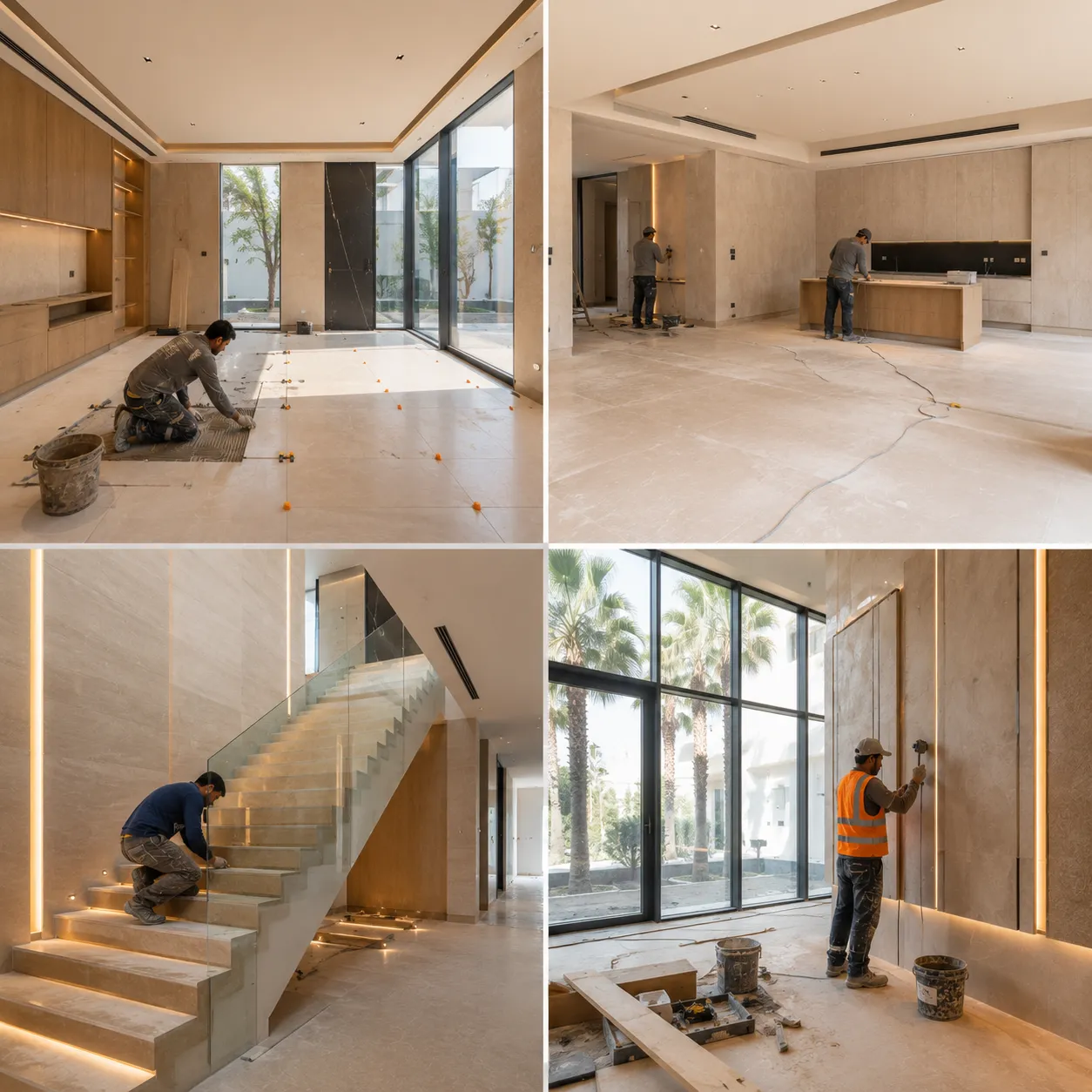
Taking a villa back to shell costs far more in labour and disposal than replacing finishes selectively.
Opening up living areas or forming new openings brings in checks, approvals and civil work that a cosmetic refresh never touches.
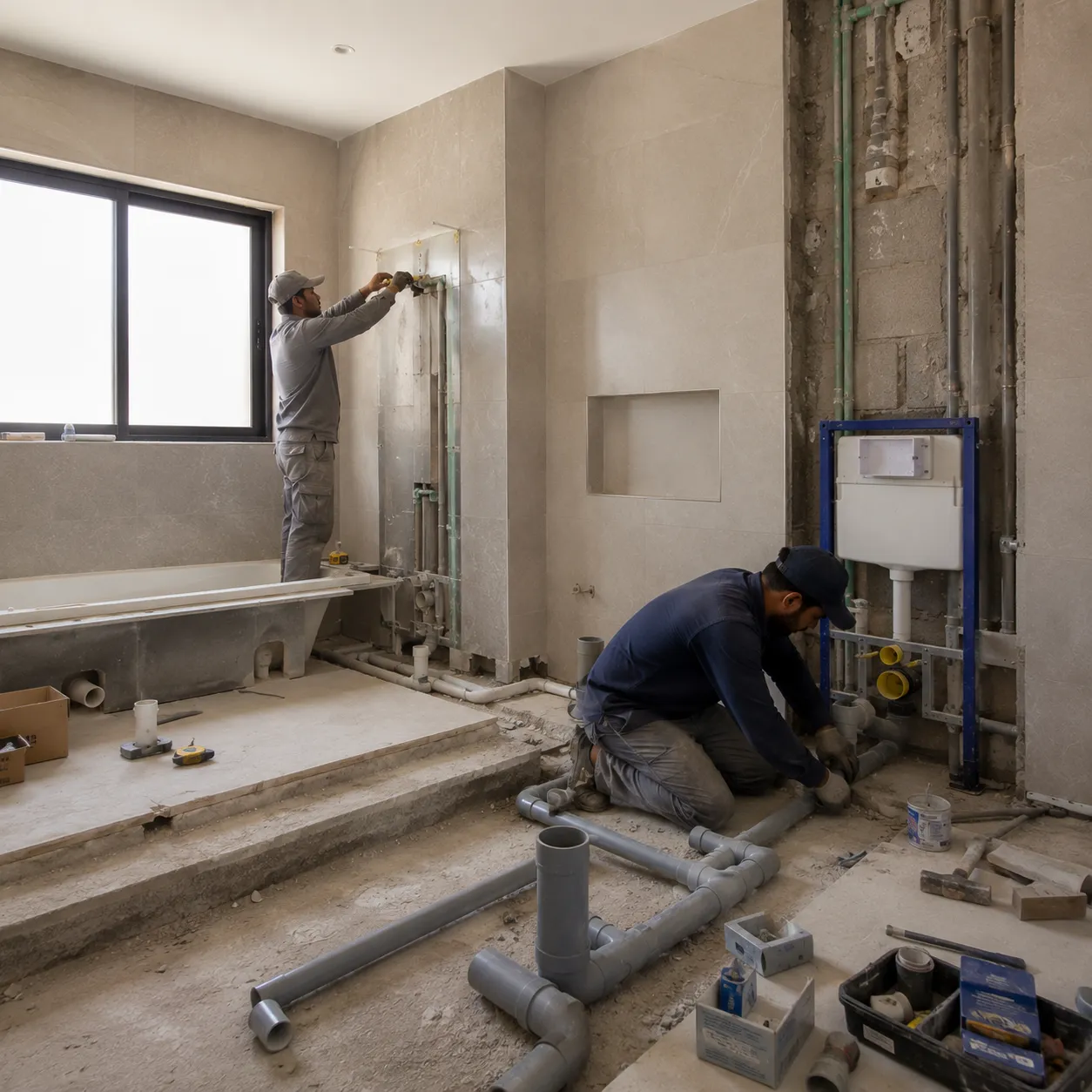
Each one carries waterproofing, tiling, fittings and its own coordination. This is usually where villa budgets separate from apartment ones.
Longer runs, more circuits and more drainage. Reusing existing positions is cheap; relocating them is not.
Cabinet run length, worktop material and appliances — and in many villas, a second wet kitchen priced alongside the main one.
Wardrobes, TV walls and vanities are priced by the linear metre, and a villa needs far more of them than a plan suggests.
Coves, shadow gaps and a higher fitting count raise both the gypsum work and the electrical work behind it.
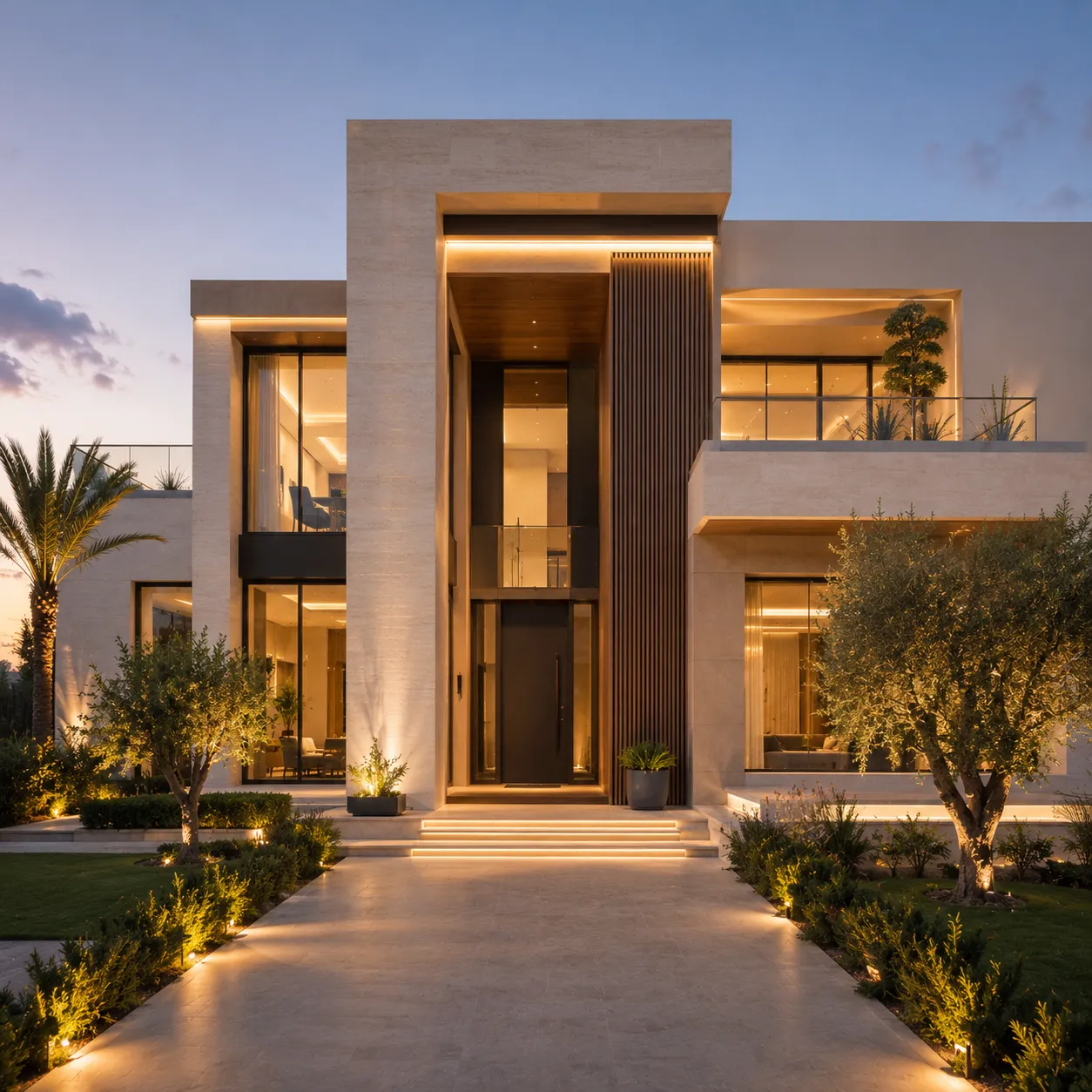
Facade, terraces and outdoor areas are a separate world of cost, and they are the first thing owners forget to price.
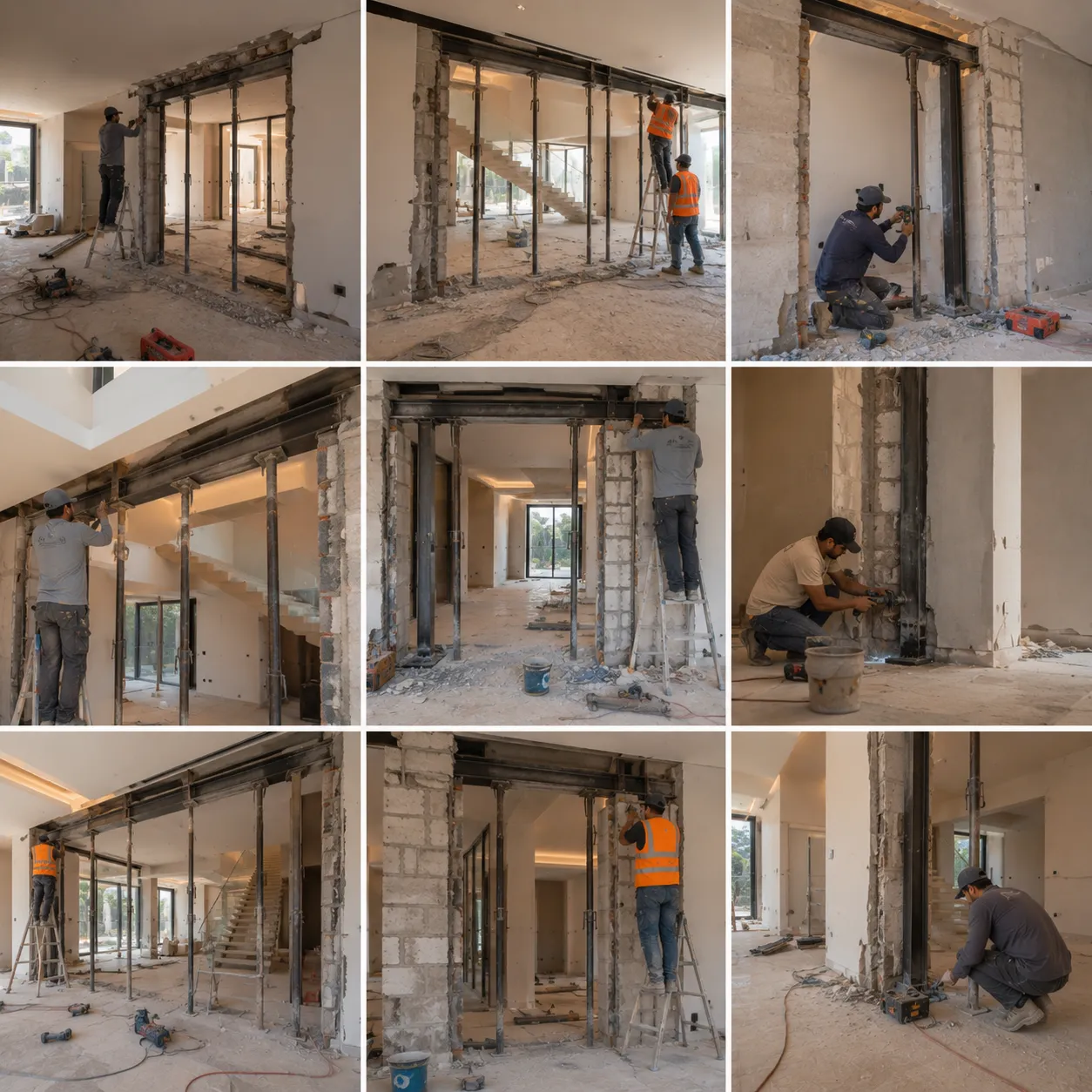
The invisible half of the budget
Blockwork, openings, plaster repairs and partition changes run alongside the electrical and plumbing routing. None of it is visible in the finished villa, which is exactly why it gets under-scoped.
Everything that sits inside a wall is completed and tested before it is closed. Reaching it afterwards means opening finished work — paying twice for something that cost very little to position correctly the first time.
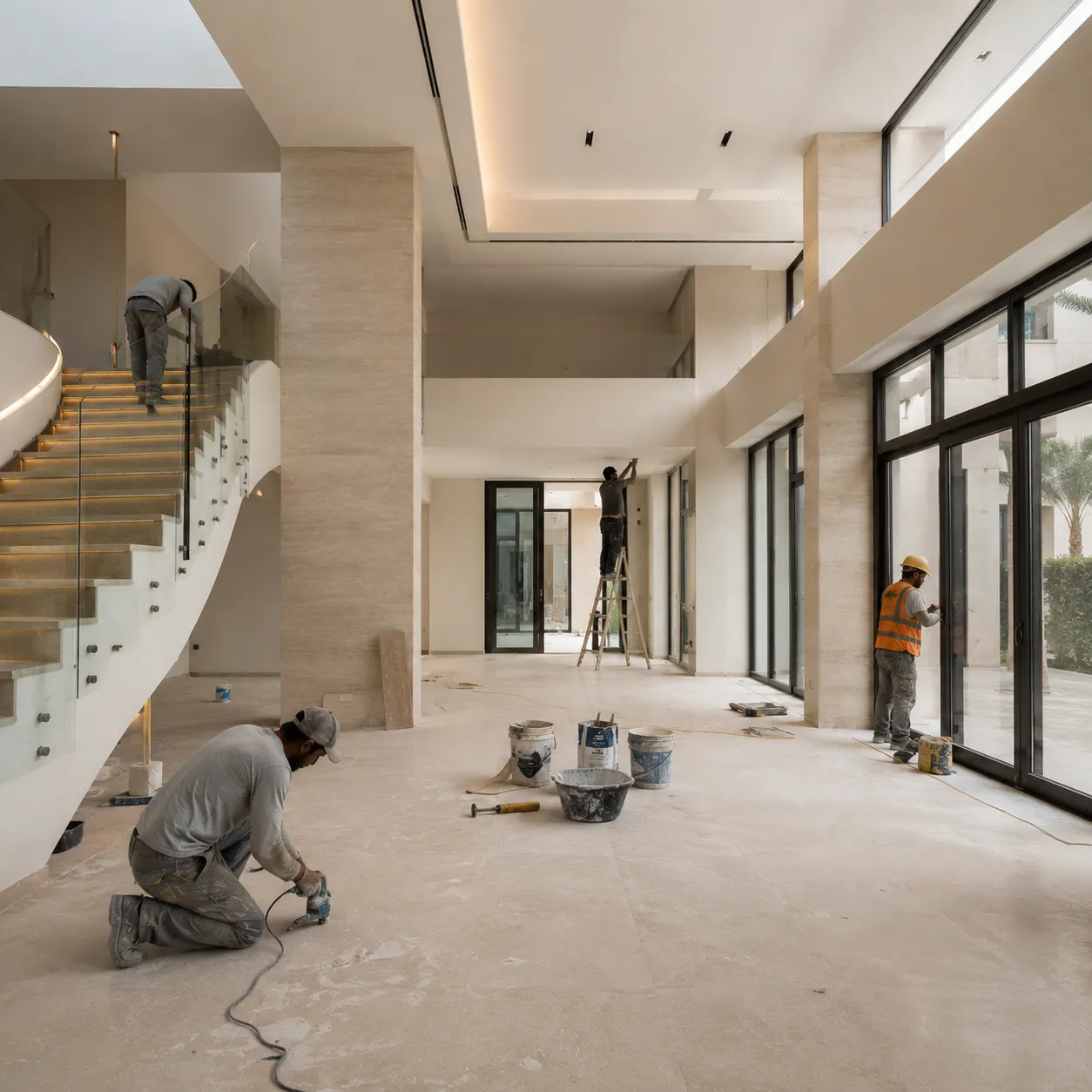
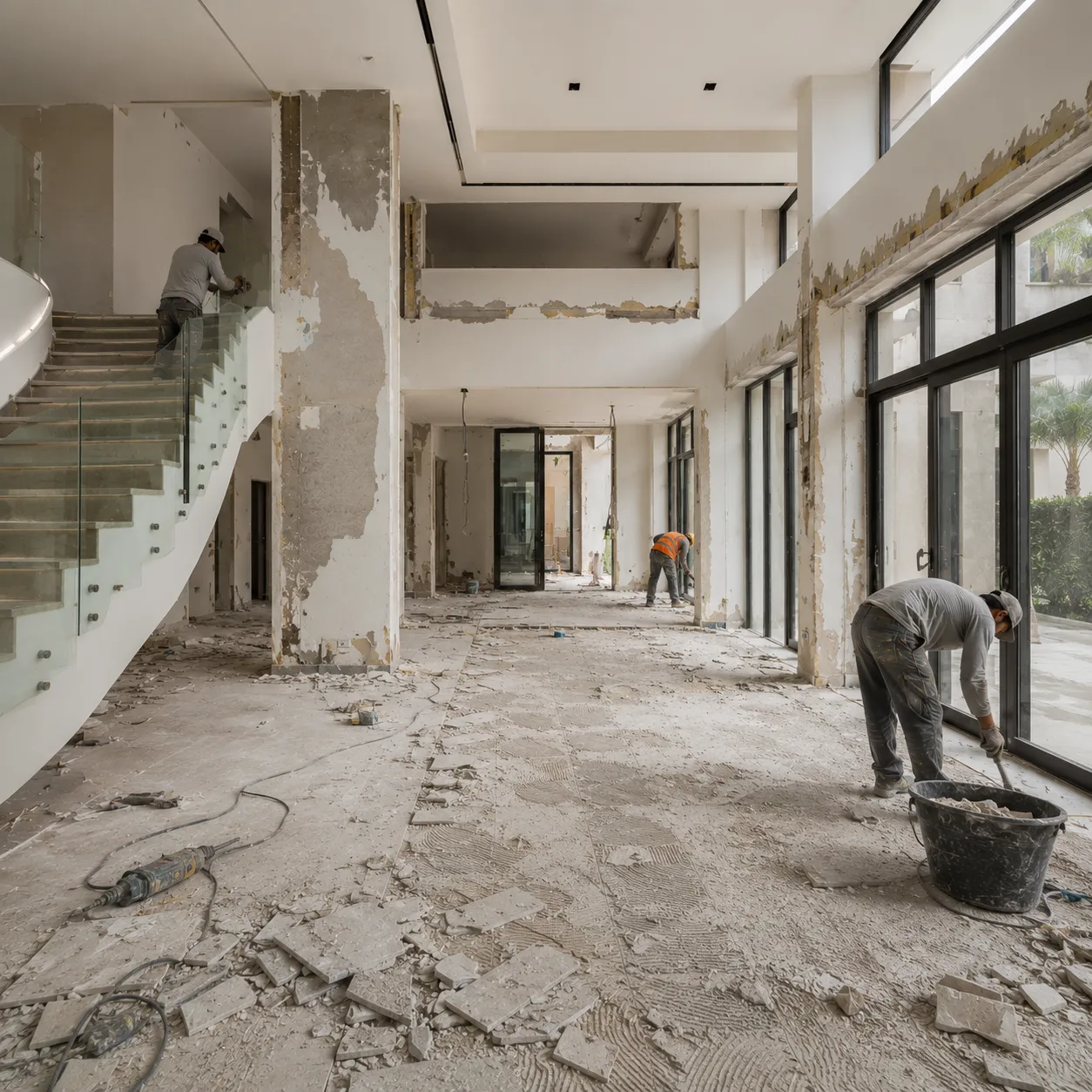
If one quotation is noticeably cheaper than the rest, this is the section to read twice.
Ask for a Scoped Quotation"Luxury finish" is not one line item. It is four or five, and they behave very differently when the budget tightens.
Gardens, terraces, driveways and facade work are usually left as "we'll deal with it after" — and then arrive as an unbudgeted project of their own.
External work also carries its own dependencies. Outdoor power and lighting are far cheaper to run while the villa is already open, and terraces that share a substrate with interior floors are better handled in the same programme.
What is included and excluded outside should be written into the scope from day one, subject to inspection and your community's rules.
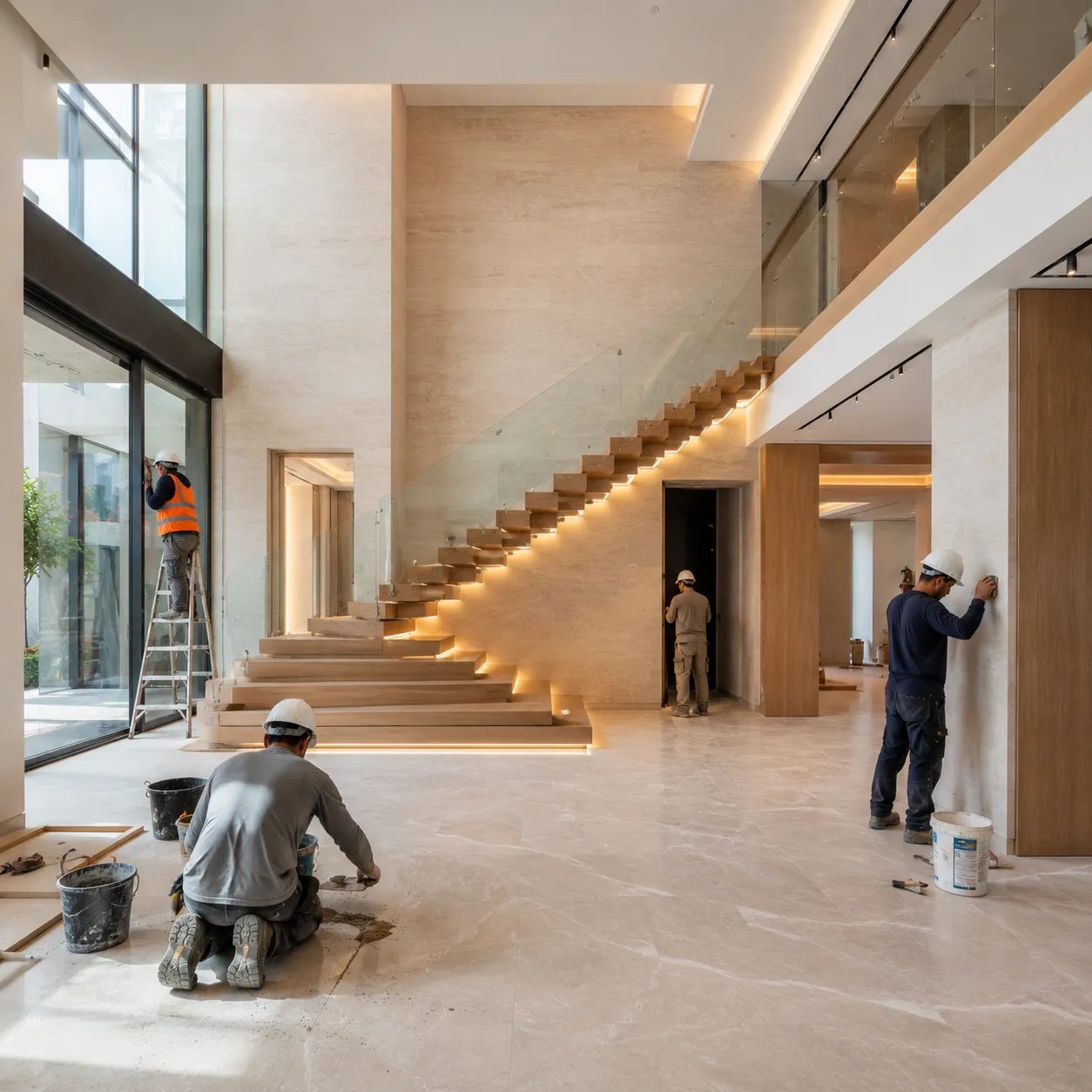
Requirements vary considerably between communities. Some are straightforward; others apply detailed rules on contractor documents, permits, working hours and disposal. Approval decisions always rest with the community or the relevant authority — which is why they belong in the plan early, not in week three.
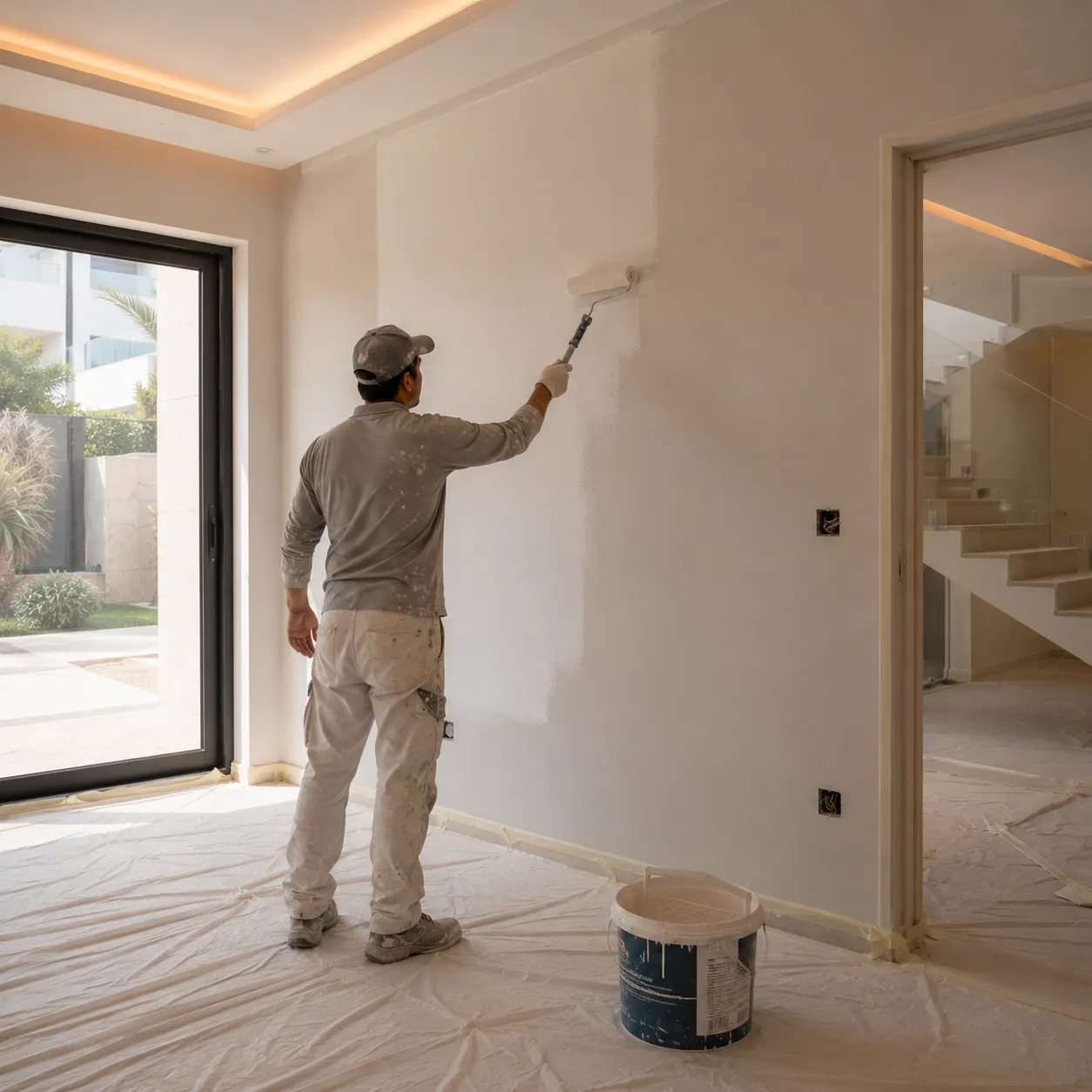
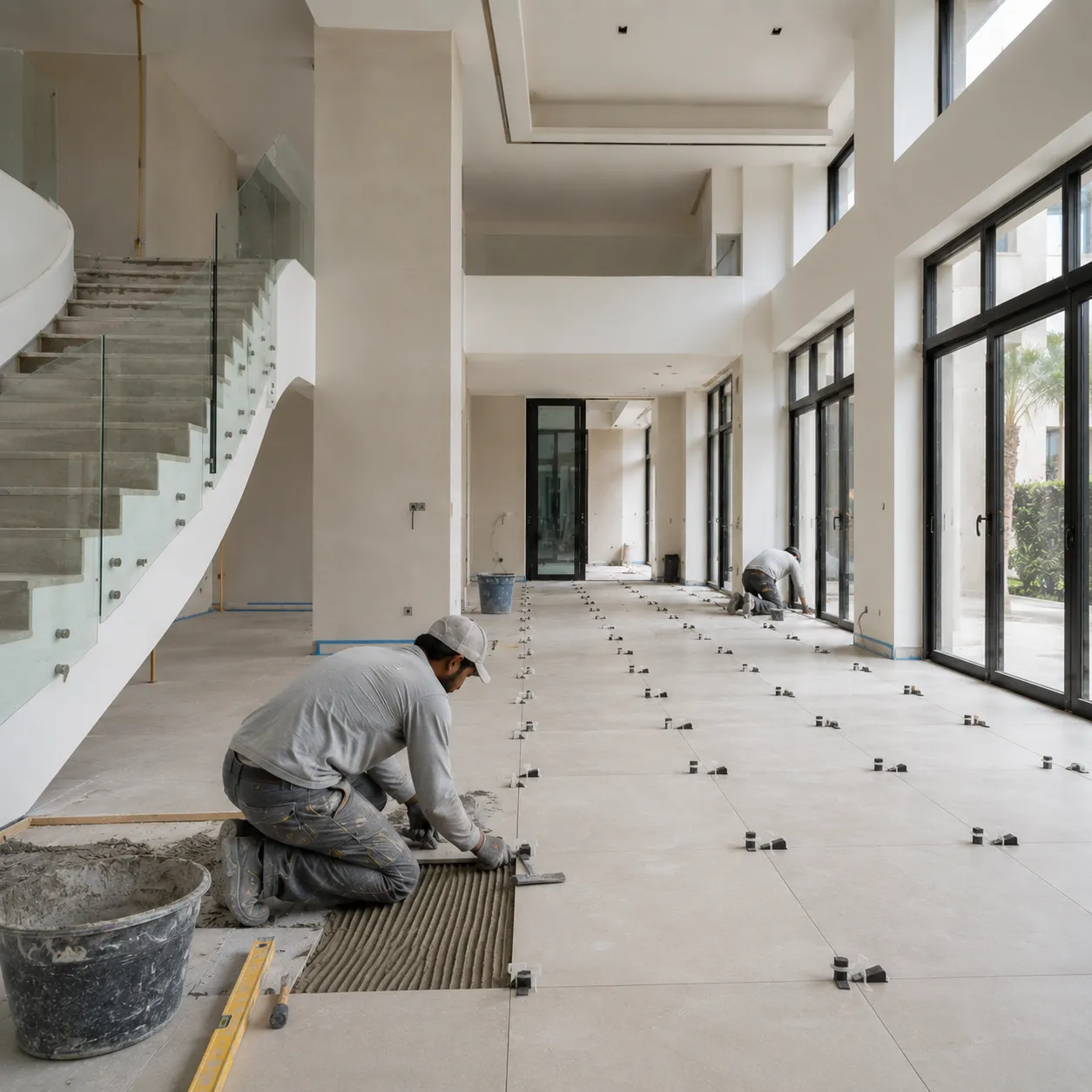
Owners who price only the first phase almost always find the second one costs more than expected. Scope everything, then choose deliberately what to defer.
Changing a tile on paper costs nothing. Changing it once the site is running affects sequence, delivery and often work already completed.
Owners who plan for a discovery treat it as a decision. Owners who spend to the last dirham treat it as a crisis.
Check each one covers the same bathrooms, the same MEP changes, the same external works and the same finish standard before you compare totals. Cheaper is usually just narrower.
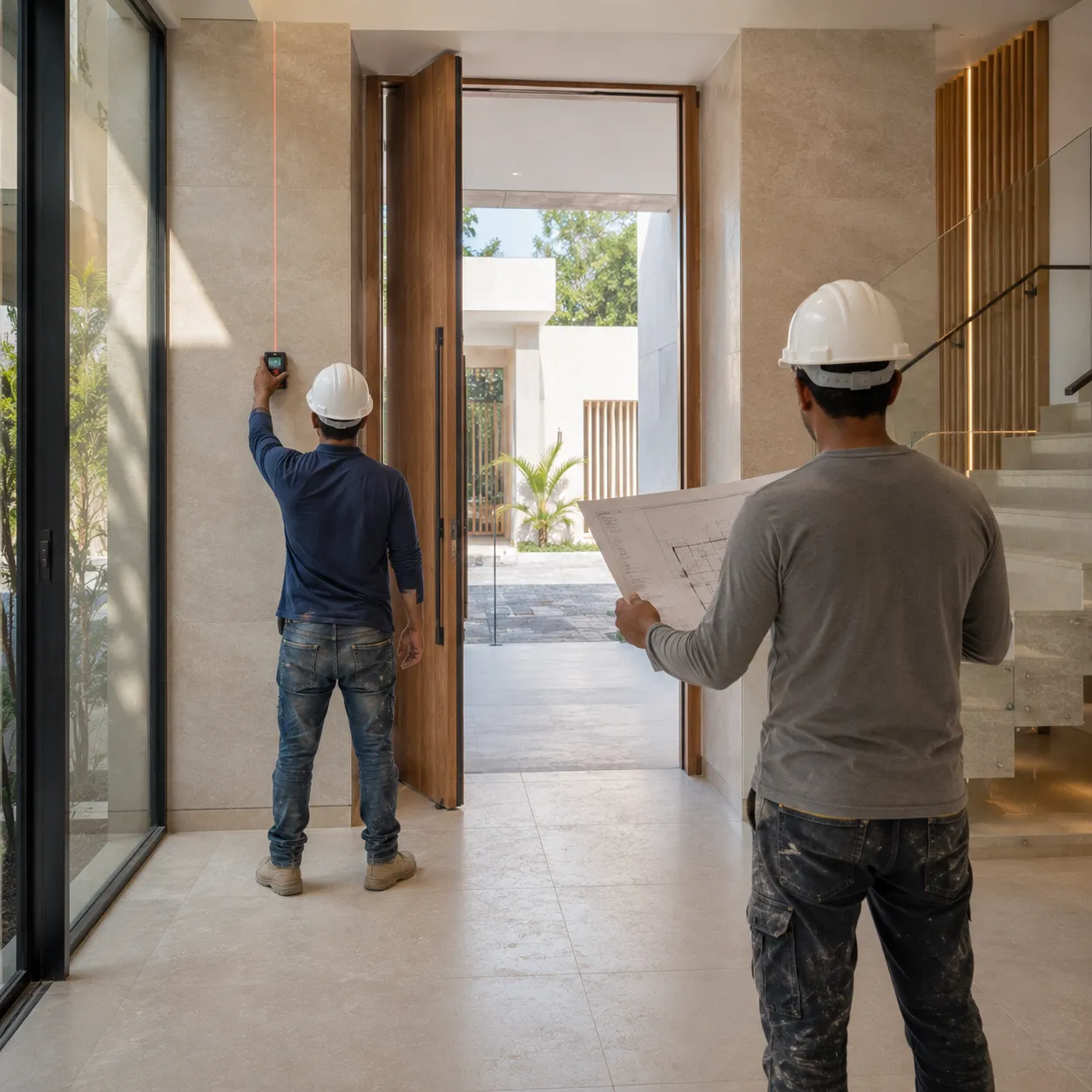
For a stage-by-stage view of how the work runs, see our villa renovation guide.
Because condition and scope decide the cost, and neither can be established remotely. Any figure quoted before a survey is a placeholder that will move once work starts.
That depends on your community and the type of work. Many developments require contractor documents, a permit or an NOC before anything begins. Requirements are checked during planning, and approval rests with the community management or relevant authority.
Non-structural partitions can often be adjusted, subject to inspection and community requirements. Structural elements are never assumed to be modifiable without proper checks.
Rarely. Each phase re-mobilises the same trades and repeats the same setup and protection. Phasing helps you spread payments and stay in the villa — it does not lower the total.
Sometimes, floor by floor. A full renovation involving demolition, MEP and flooring is difficult to live through — dust, noise and losing access to bathrooms or the kitchen are the practical obstacles. It is assessed at the site visit.
Send the location, approximate size, number of bathrooms and the work you are considering. We arrange a site visit, inspect the villa and price against a defined scope.
Tell us where the villa is, its size and condition, and which parts you want changed. We arrange a site visit, inspect the property properly and prepare a quotation against a defined scope — not an assumption.