
Extent of demolition
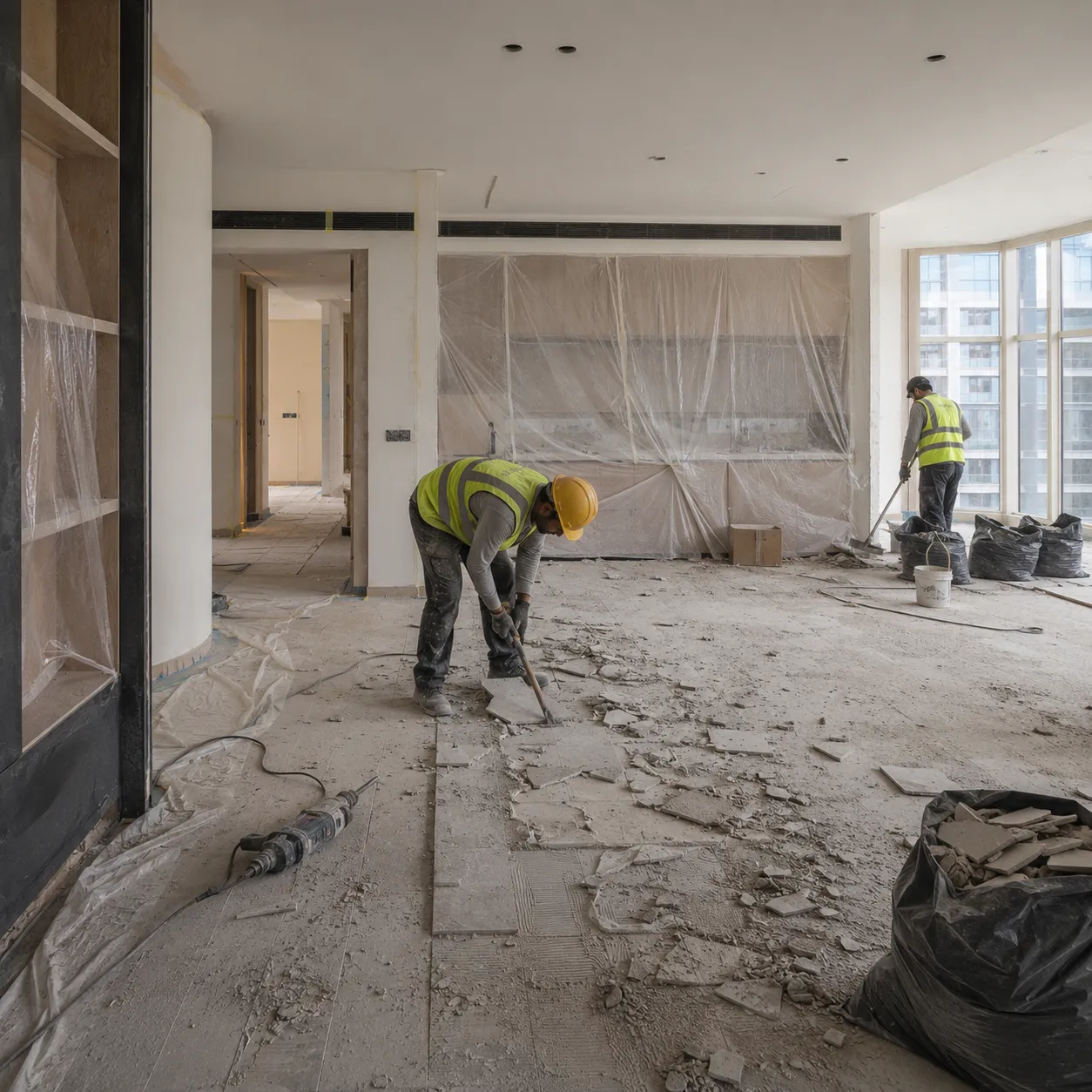
Stripping back to shell costs more in labour and disposal than replacing finishes selectively.
Published on 31 Jul 2026 · 6 min read
Budgeting guide
Ask three contractors what an apartment renovation costs in Dubai and you will get three very different answers — usually because each one is quietly assuming a different scope.
Cost in this market is driven by what you are actually doing to the apartment, not by how many square feet it has. This guide breaks down what moves the number, what tends to get missed, and where saving money is sensible rather than expensive later.
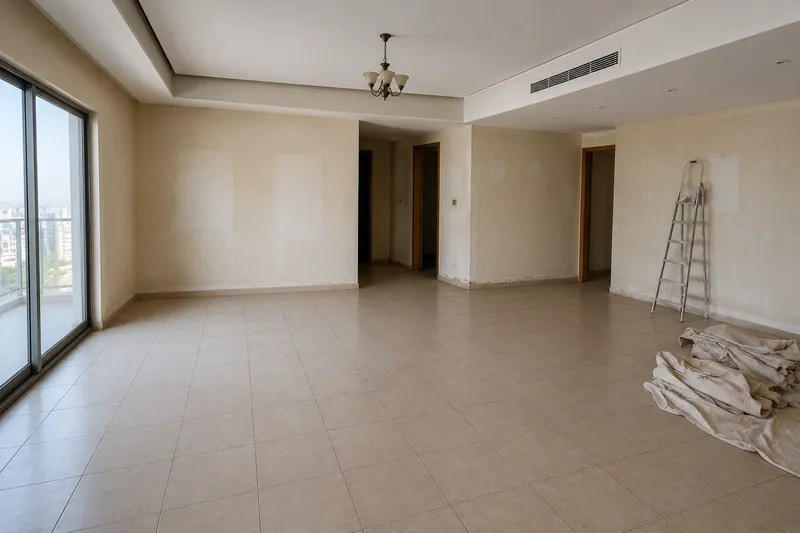
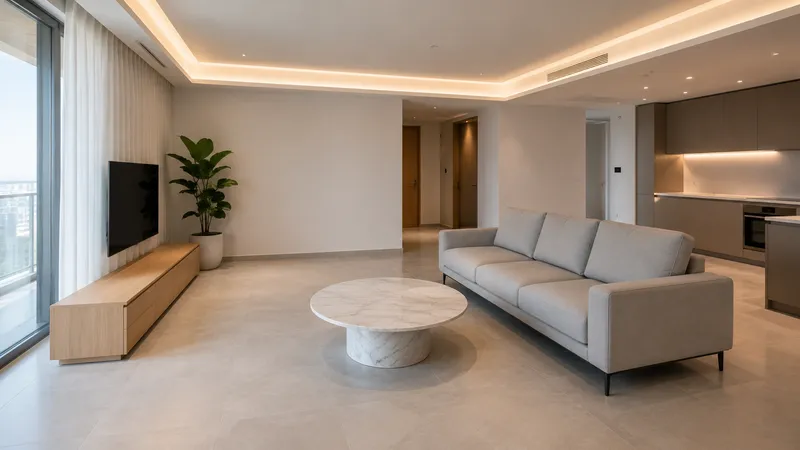
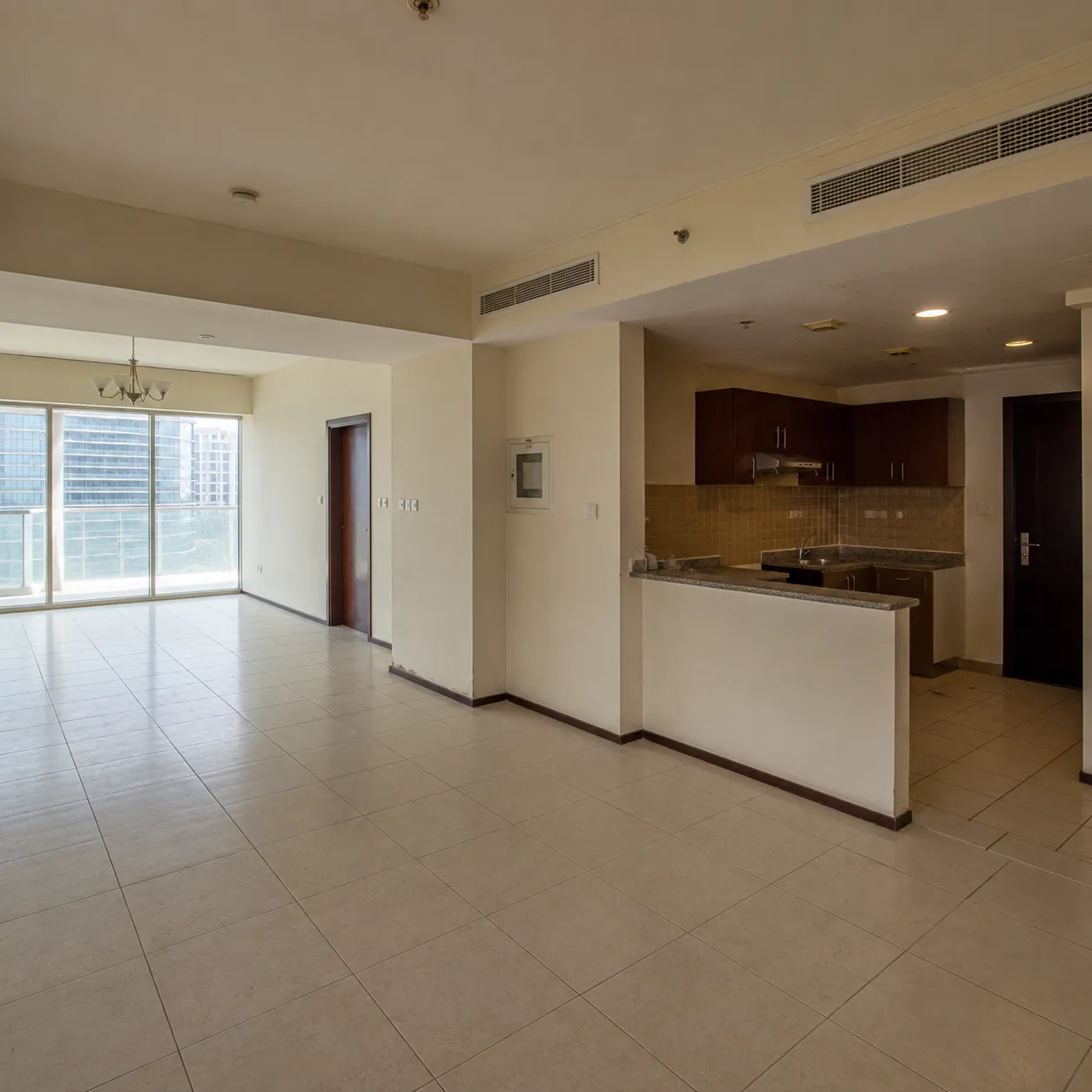
Two apartments in the same tower, identical in area, can land a long way apart on cost. One might need a light refresh — paint, flooring, a new kitchen. The other might need both bathrooms rebuilt, the electrical layout changed and the ceilings reworked.
Area sets the quantity of a few trades. Scope and specification set almost everything else.
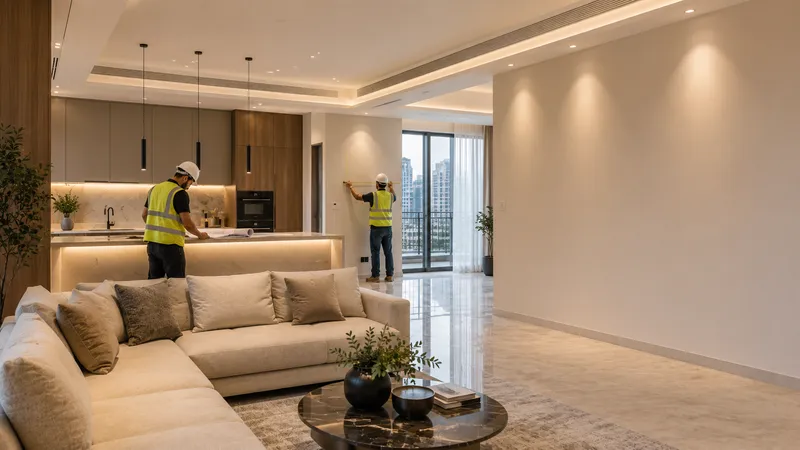
A useful quotation comes out of a measured survey — the condition of the floors, the state of the wet areas, where the services currently run, and what the building will allow.
Without those inputs, any figure you are given is a placeholder that will move once work starts.
In most Dubai apartment projects, the same handful of items account for the bulk of the difference between one quotation and another.
Stripping back to shell costs more in labour and disposal than replacing finishes selectively.
Cabinet run length, worktop material and appliance changes usually make this the single largest item.
Each one adds waterproofing, tiling, fittings and its own coordination — a two-bath unit is not twice a one-bath.
Reusing existing points is cheap. Relocating them, especially where chasing is involved, is not.
Format and material affect supply cost, but the substrate preparation underneath often costs as much.
Coves, shadow gaps and a higher fitting count increase both the gypsum work and the electrical work.
Built-in storage is priced by the linear metre, so it scales quickly with ambition.
Restricted hours, lift bookings and narrow delivery windows stretch the programme, and time is cost.
The part nobody sees
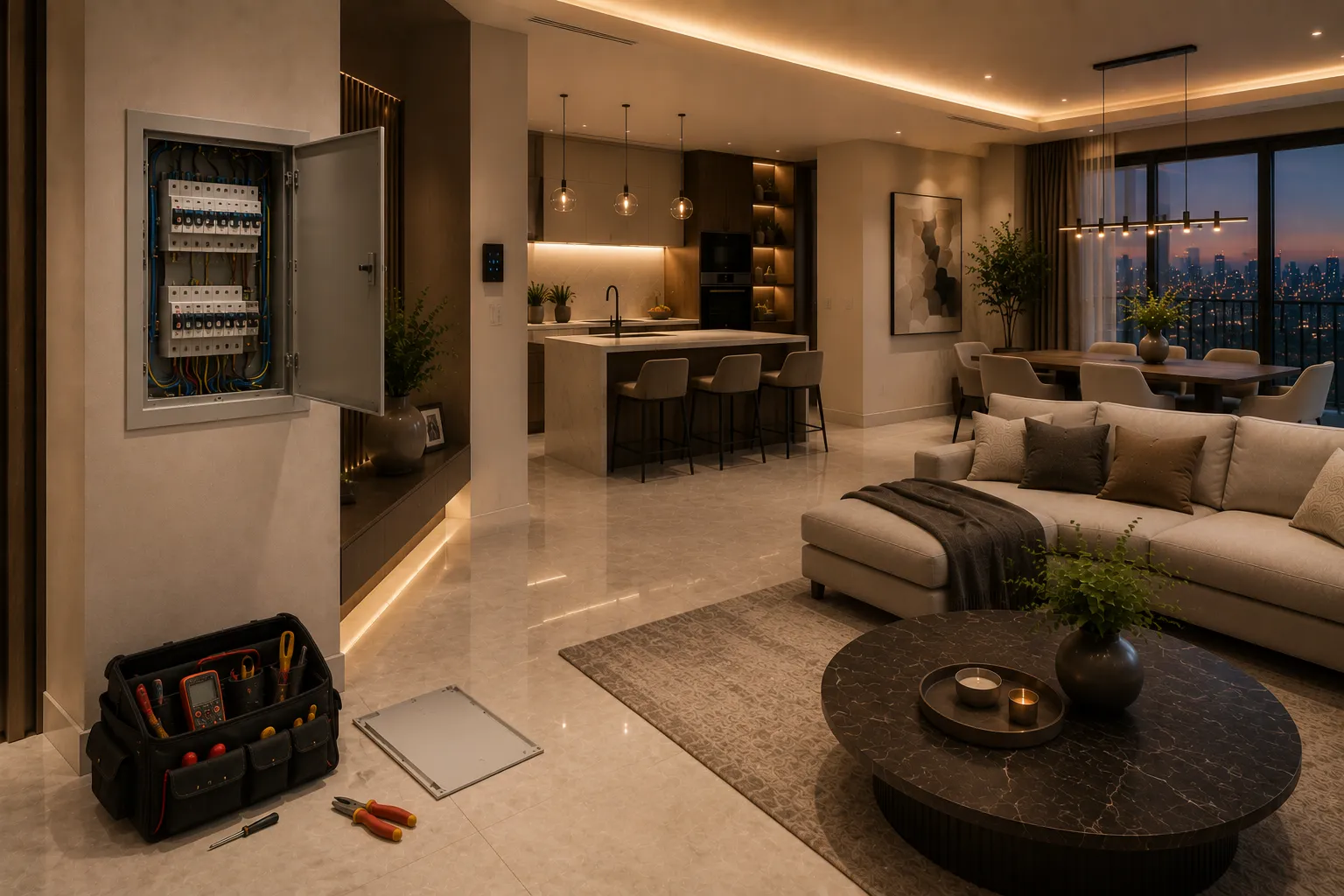
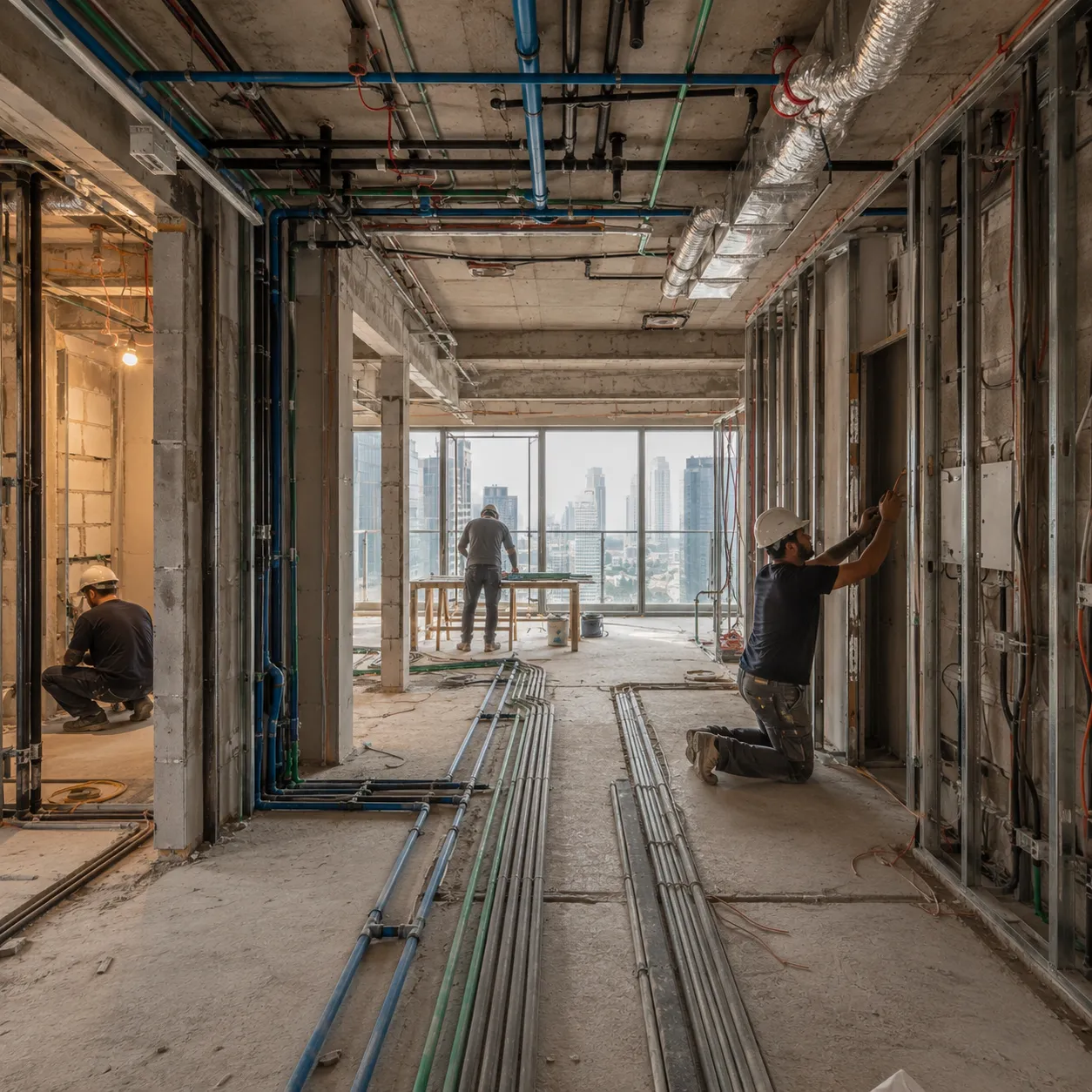
MEP work is where budgets quietly separate. It is invisible in the finished apartment, which makes it the easiest thing to under-scope and the most expensive thing to revisit.
Once tiling, cabinets and ceilings have closed a wall, reaching a socket or a drain behind it means opening finished work — paying twice for something that cost very little to position correctly the first time.
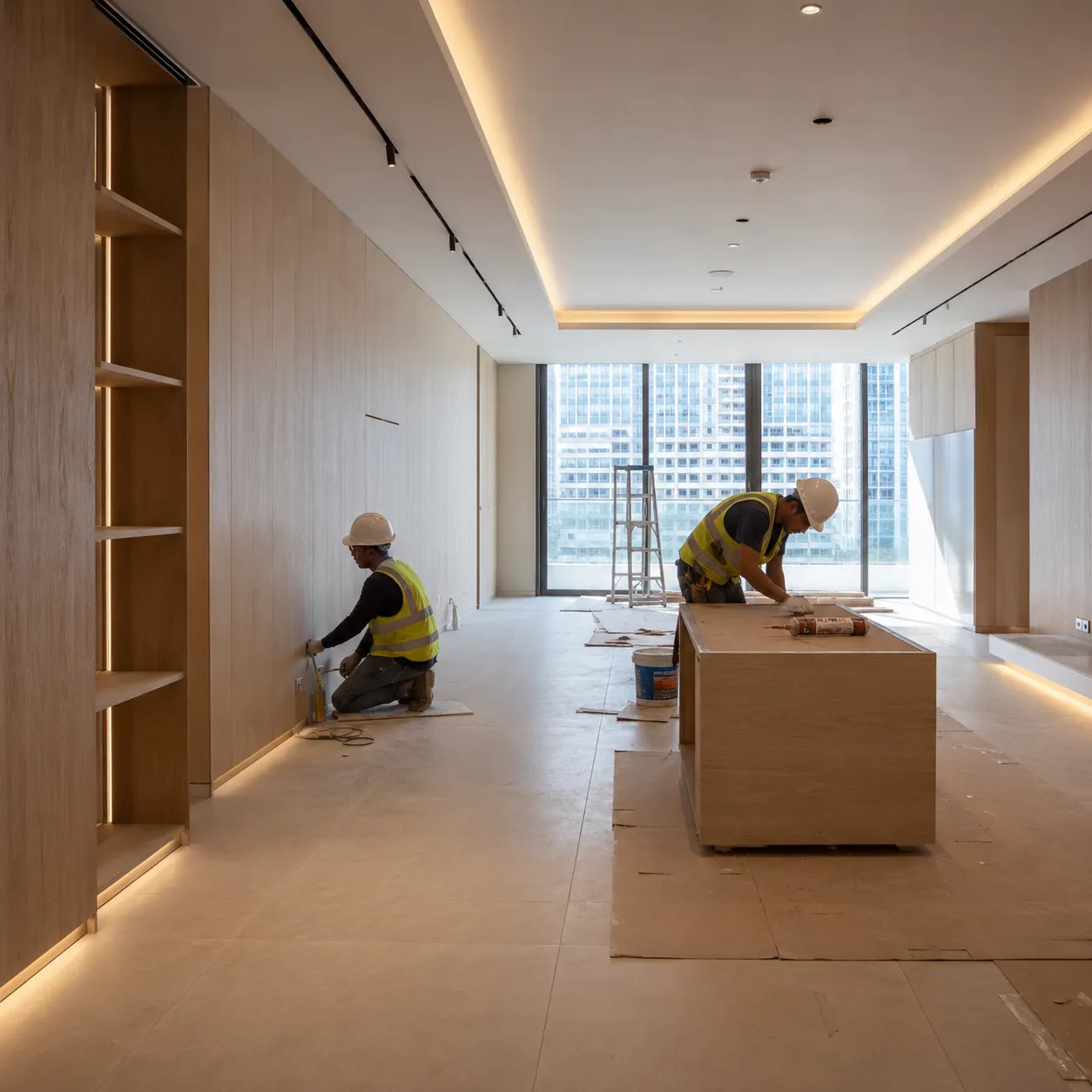
If a quotation is noticeably cheaper than the others, this is usually the section to read twice.
Ask for a Scoped QuotationThese rarely appear in an early estimate, and they are the usual reason a project ends up above what the owner planned for.
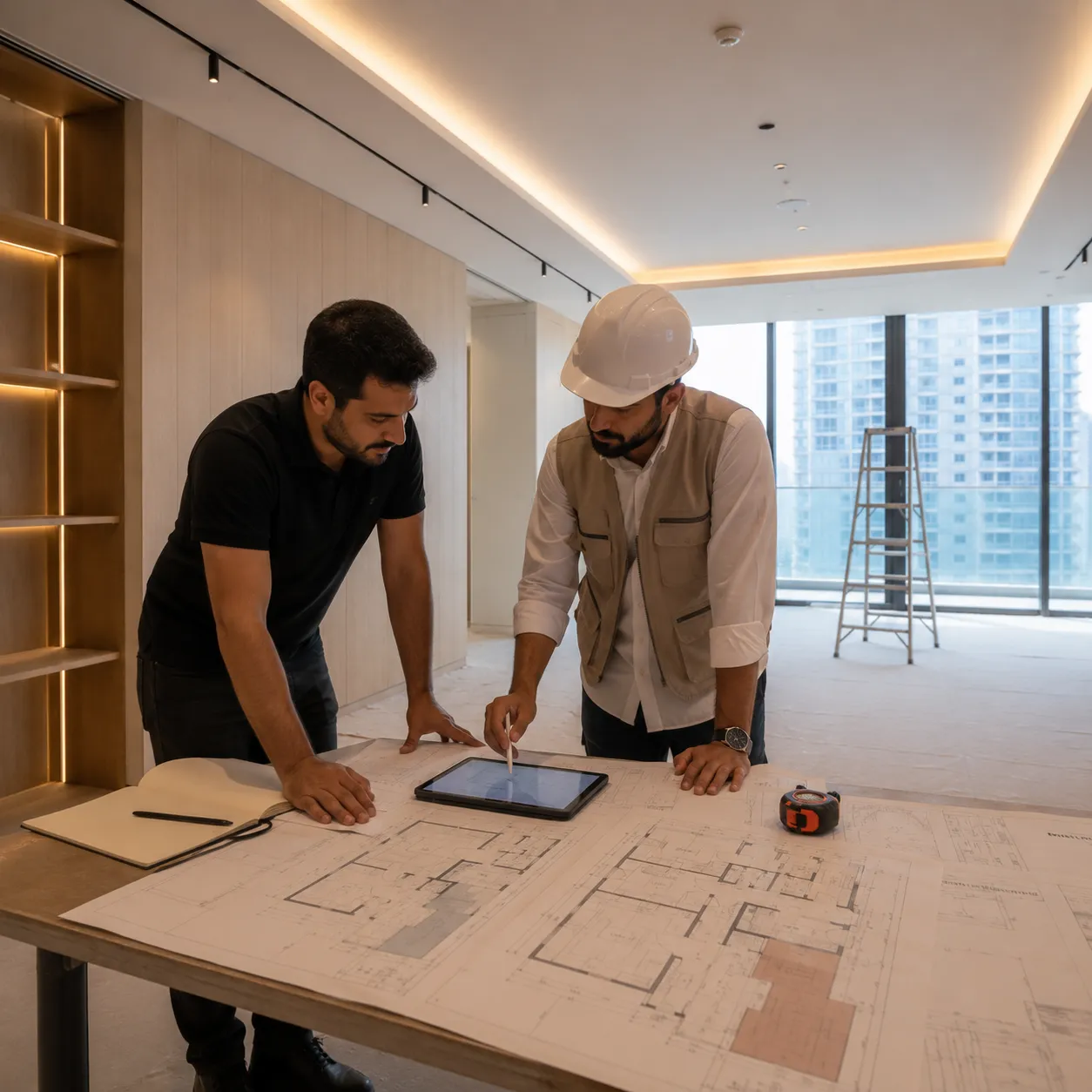
A quotation built on a defined scope — what is included and what is excluded — makes later variations visible instead of hidden. A lump sum with no detail behind it is impossible to compare and easy to dispute.
Changing a tile or a cabinet finish on paper costs nothing. Changing it once the site is running affects sequence, delivery and often work already completed.
Set money aside specifically for what the walls reveal. Owners who plan for it treat a discovery as a decision; owners who spend to the last dirham treat it as a crisis.
Before comparing totals, check that each one covers the same bathrooms, the same MEP changes and the same finish standard. Cheaper is often simply narrower.
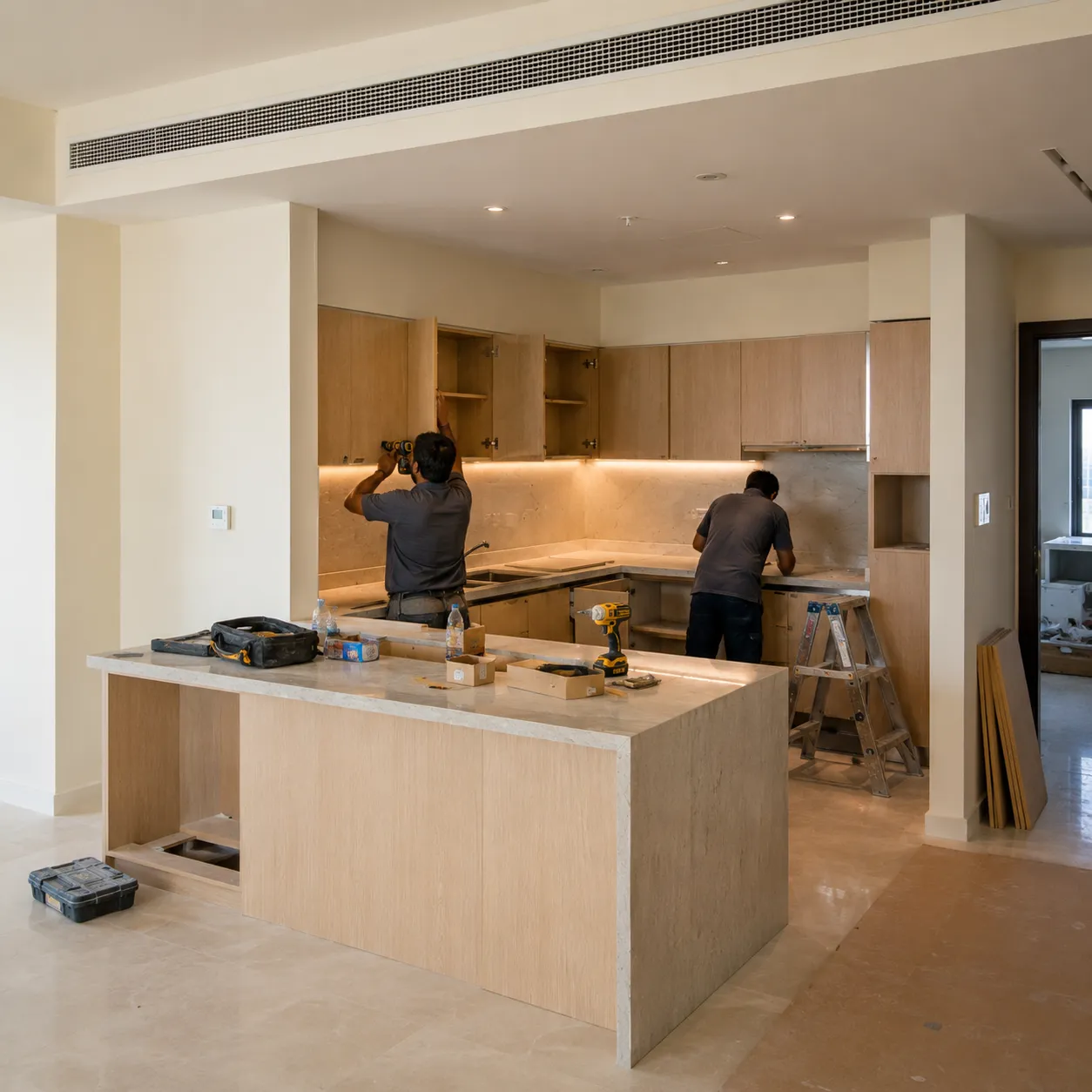
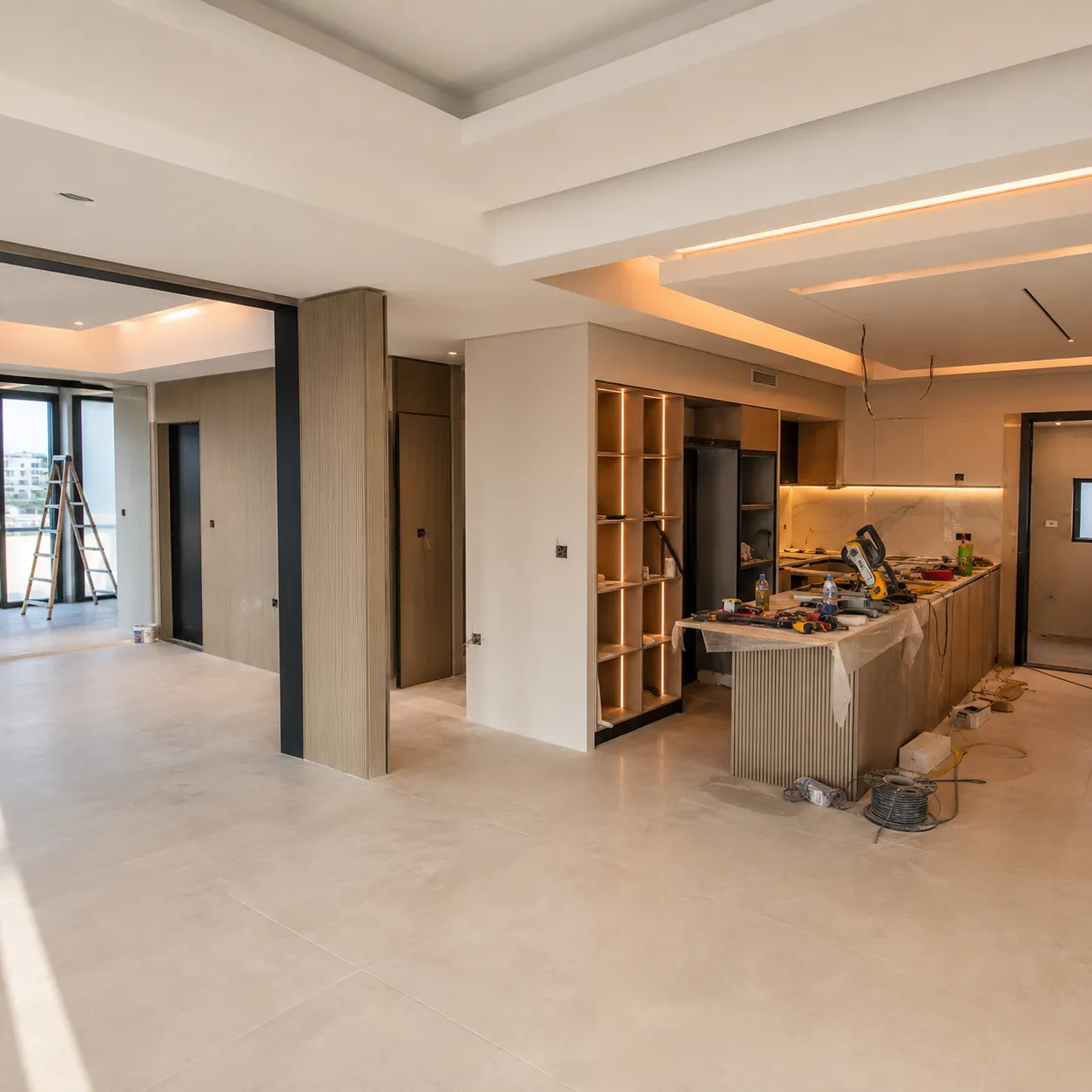
Renovating everything at once is not always the right answer, but there are situations where it is clearly the cheaper path over time:
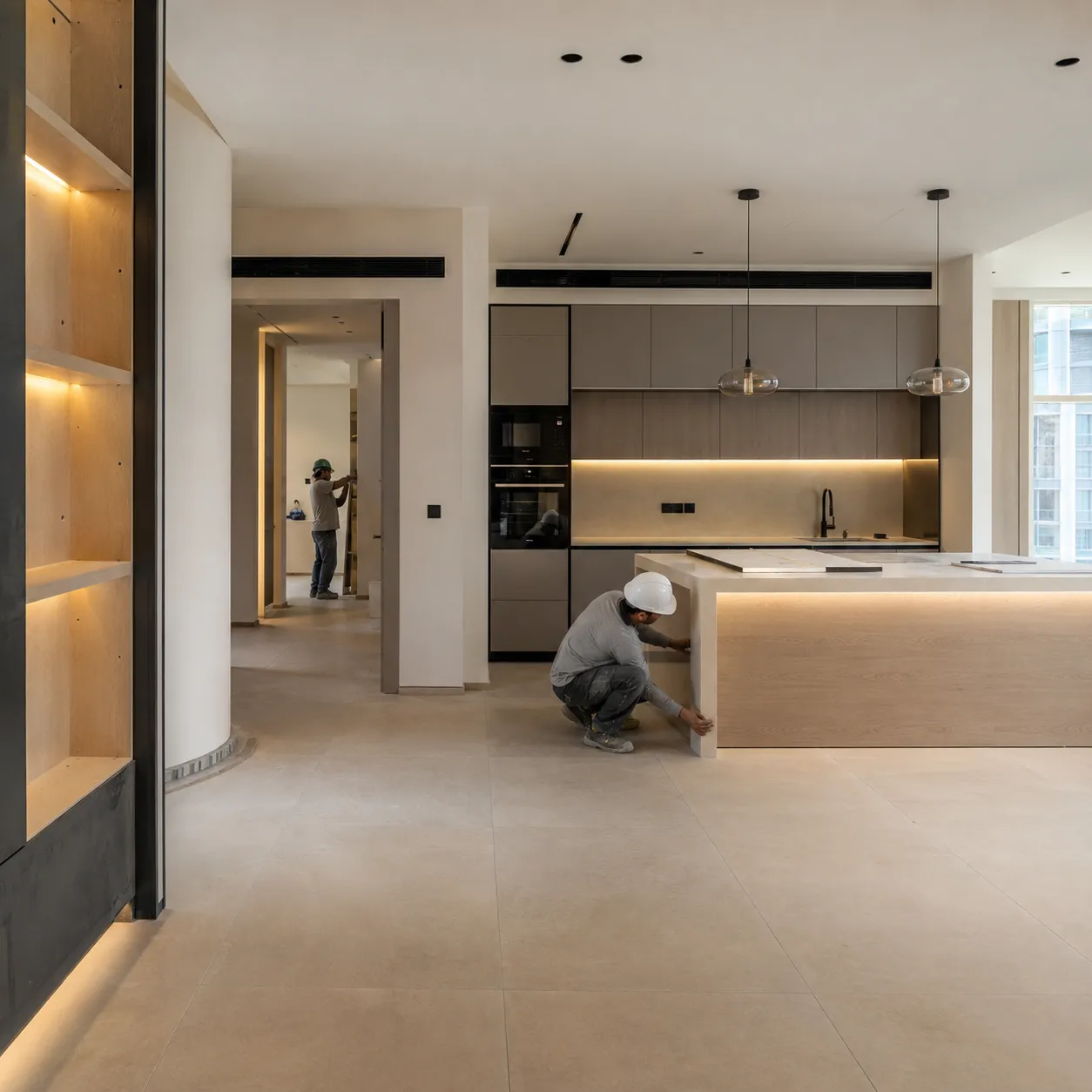
If you are weighing up the full scope, our apartment renovation guide walks through each stage in order, from survey to handover.
Because the two things that decide the cost — the apartment's actual condition and the scope you want — can only be established on site. A figure given before that will change once work starts.
The kitchen in most apartments, because it combines cabinetry, worktops, appliances and services in one item. Bathrooms overtake it when there are several of them being rebuilt.
Yes, more than most people expect. Permit requirements, restricted working hours, lift bookings and disposal arrangements all extend the programme, and a longer programme costs more.
Usually not. Each phase re-mobilises the same trades, re-protects the same areas and repeats the same setup. Phasing buys you time to spread payments, not a lower total.
A written scope room by room, clear exclusions, the material specification it is priced against, and the work sequence. Anything less makes comparison and later variations difficult.
Send us the location, number of rooms and the work you are considering. We arrange a site visit, inspect the apartment and price against a defined scope.
Tell us where the apartment is, how many rooms it has and what you want changed. We arrange a site visit, inspect the property properly and prepare a quotation against a defined scope — not an assumption.