
Reference checklist
Villa Renovation Checklist Dubai: What to Confirm at Every Stage
In an apartment, a missed step delays one thing. In a villa, where trades overlap across two floors and several wet areas, it usually delays three.
This checklist covers what to confirm at each stage, and what it actually costs when it is skipped.
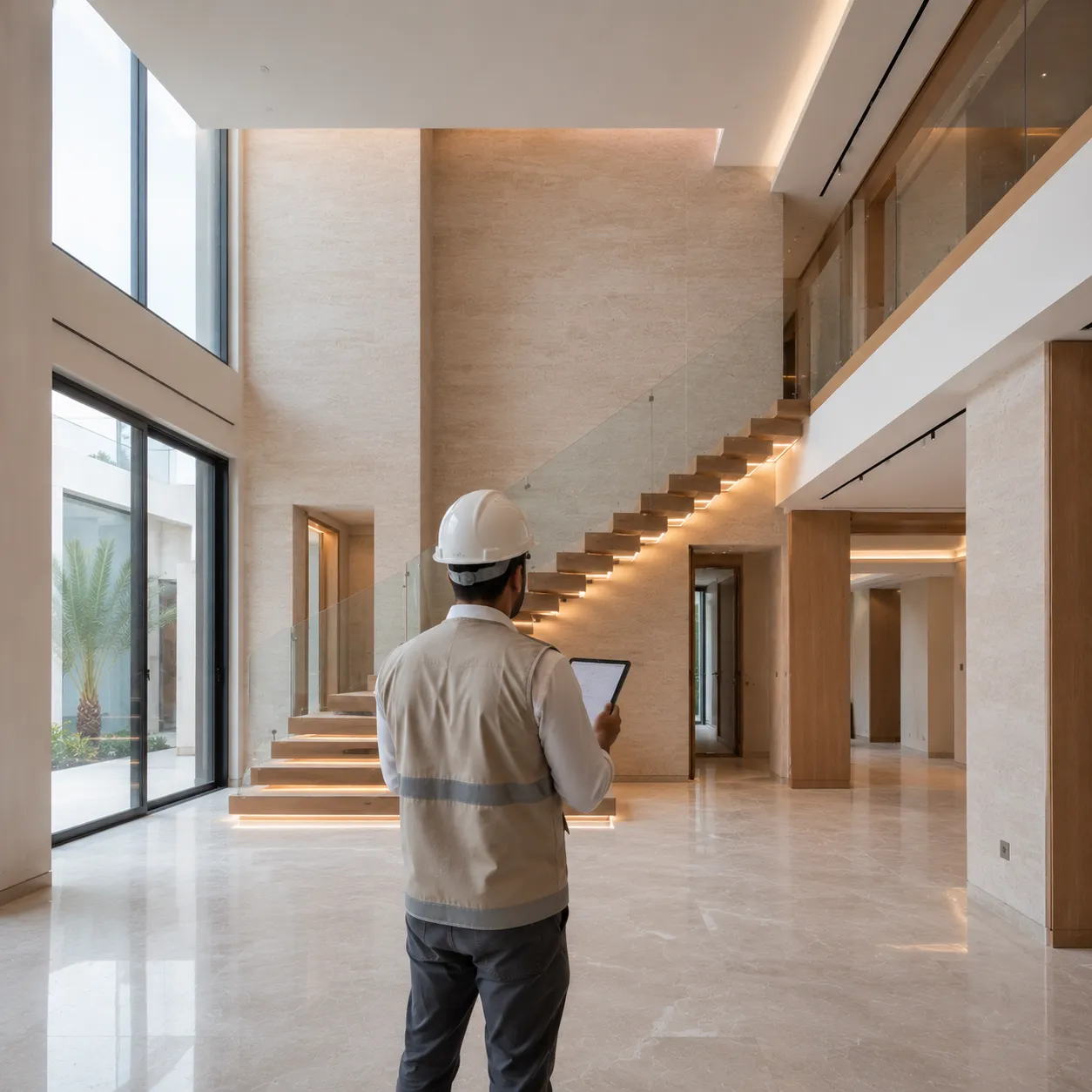
Planning, Budget and Approvals
Price the whole villa first
Then decide what to phase. Owners who price only phase one almost always find phase two costs more than expected.
Start community approvals immediately
Contractor documents, permits or an NOC, plus rules on hours, access and disposal. Approval rests with the community, so late applications delay everything.
Get a floor-by-floor survey
Including the external envelope. A quotation from a floor plan misses everything the sun has done to the outside.
Decide what's included outside
Gardens, terraces, driveways and facade. Left as "later", they arrive as an unbudgeted project of their own.
Count your joinery in metres
Wardrobes, vanities and storage are priced by the linear metre and a villa needs far more than a plan suggests.
Hold a real contingency
A villa strip-out reveals more than an apartment does, simply because there is more of it to reveal.
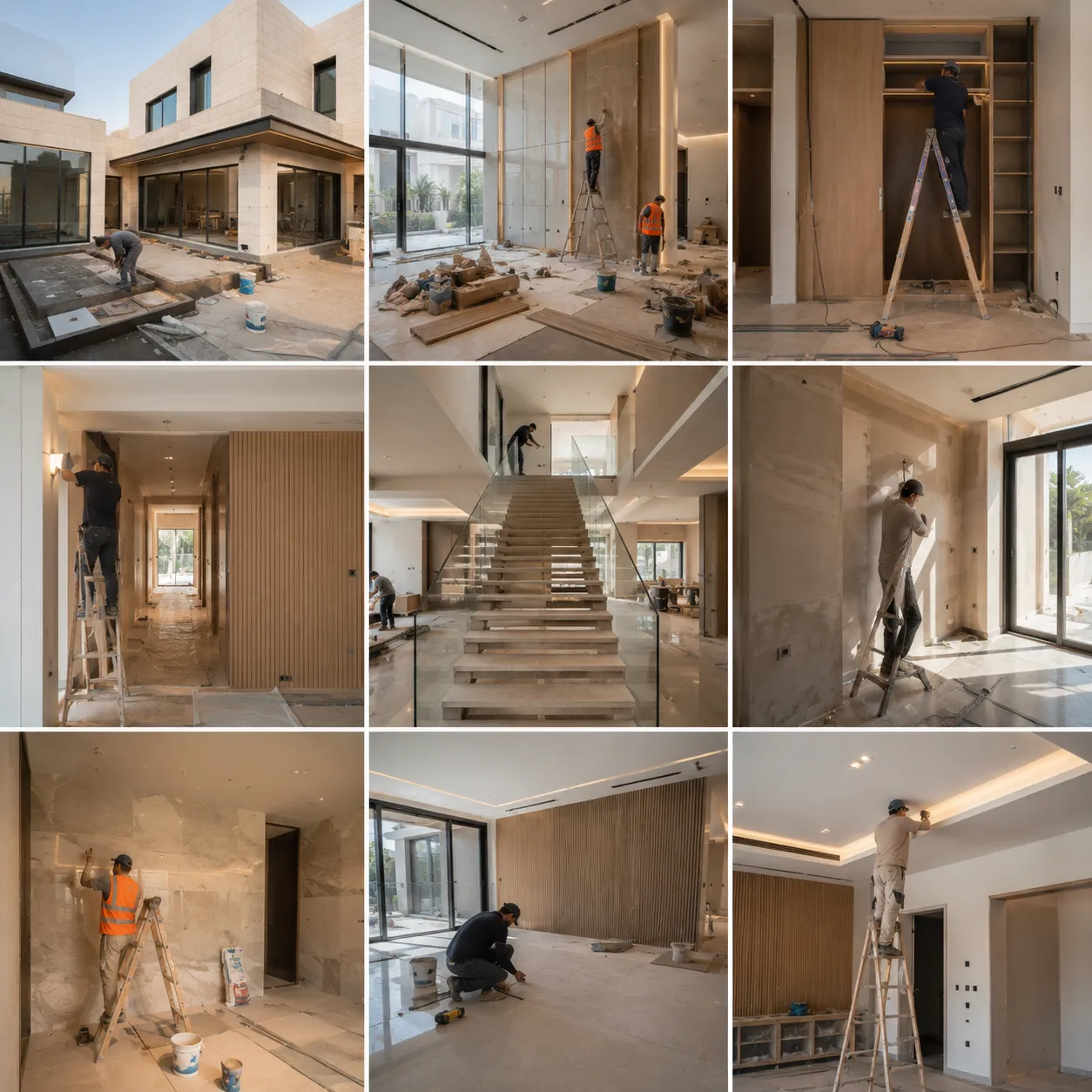
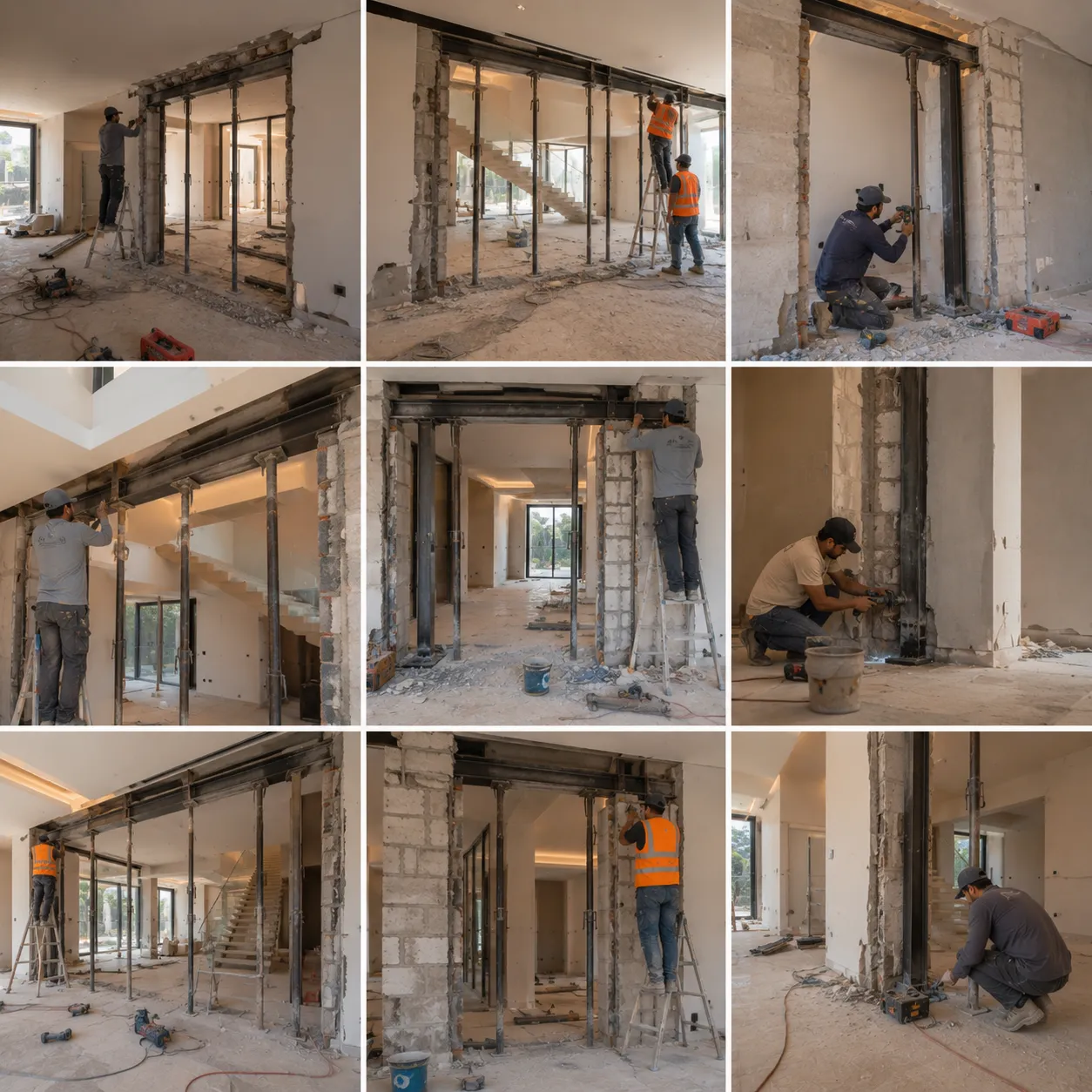
Structure, MEP and the Stages You Can't Reverse
Check what's structural before you plan around it
Non-structural partitions can often be adjusted. Structural elements are never assumed to be modifiable without proper checks.
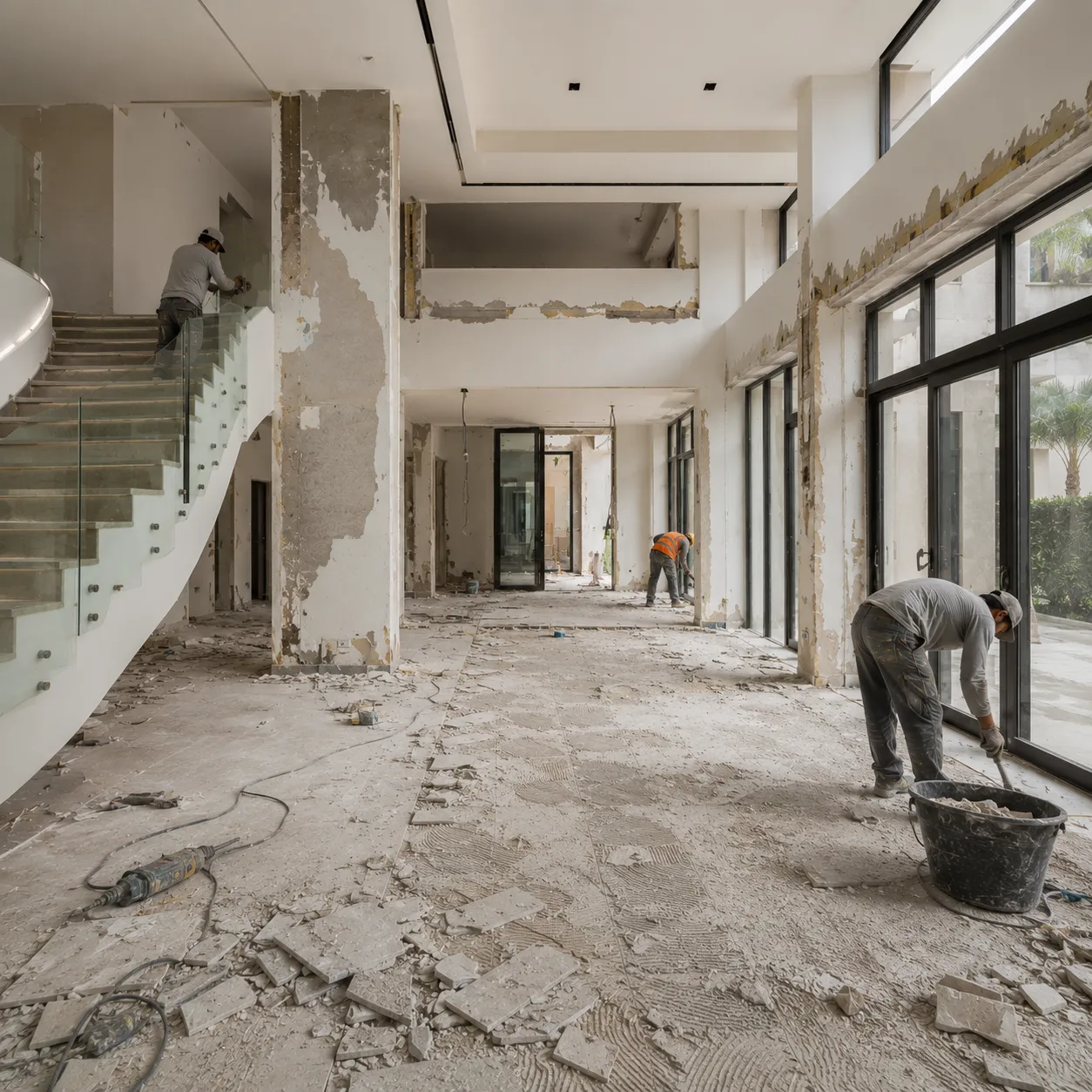
Walk the villa after strip-out
Old waterproofing, uneven screed, redundant pipework and past alterations all surface here. Agree the implications before work continues.
Inspect MEP on both floors before closing
Longer runs mean more places for a mistake to hide. Everything is tested before a ceiling or a tile covers it.
Confirm waterproofing in every wet area
Multiply the risk by the number of bathrooms. This is the one item where saving always costs more later.
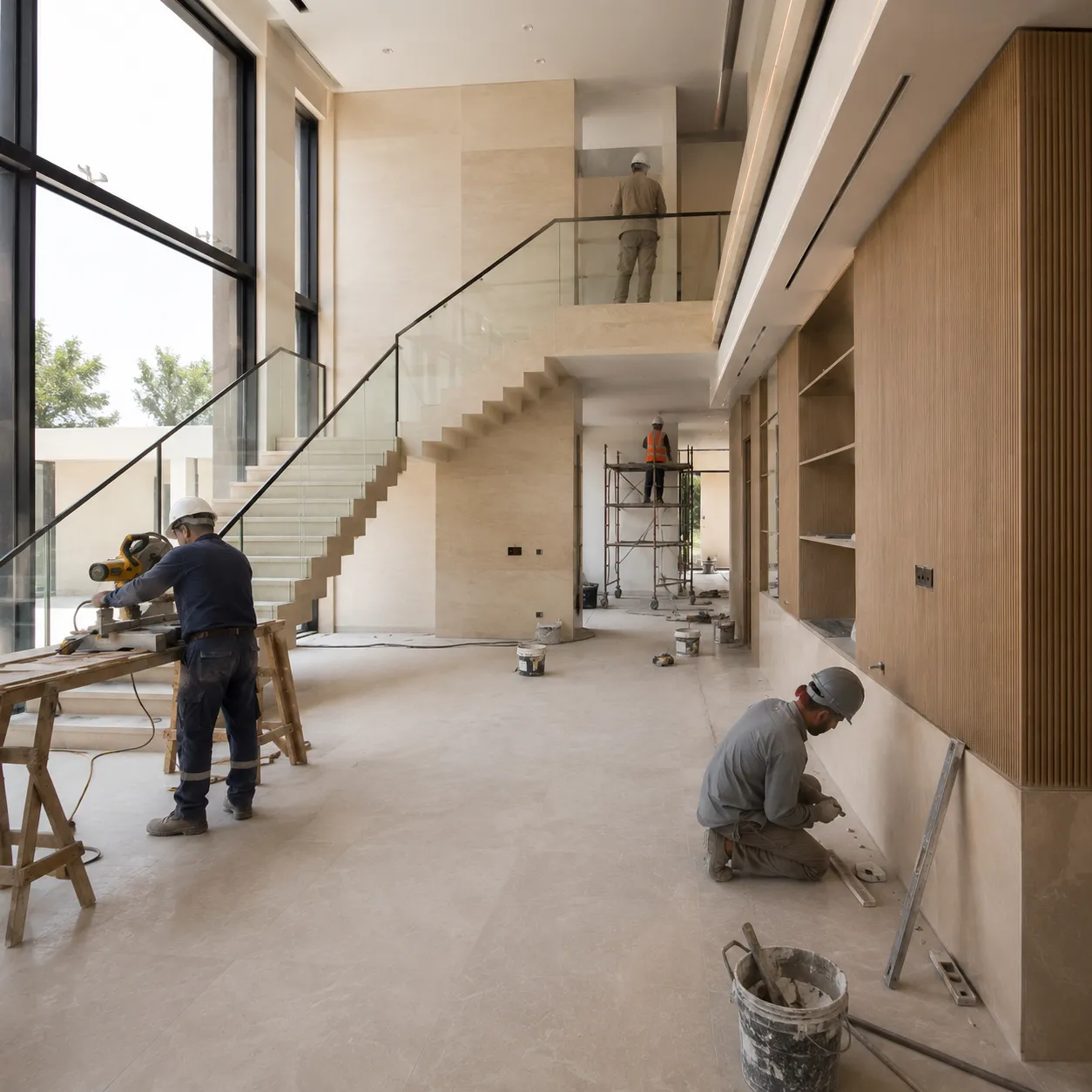
Agree the flooring set-out including the staircase
Joint lines that run continuously between rooms and up the stairs are planned, never improvised.
Order long-lead items early
Stone, made-to-order worktops and joinery. One late delivery can idle an entire villa site.
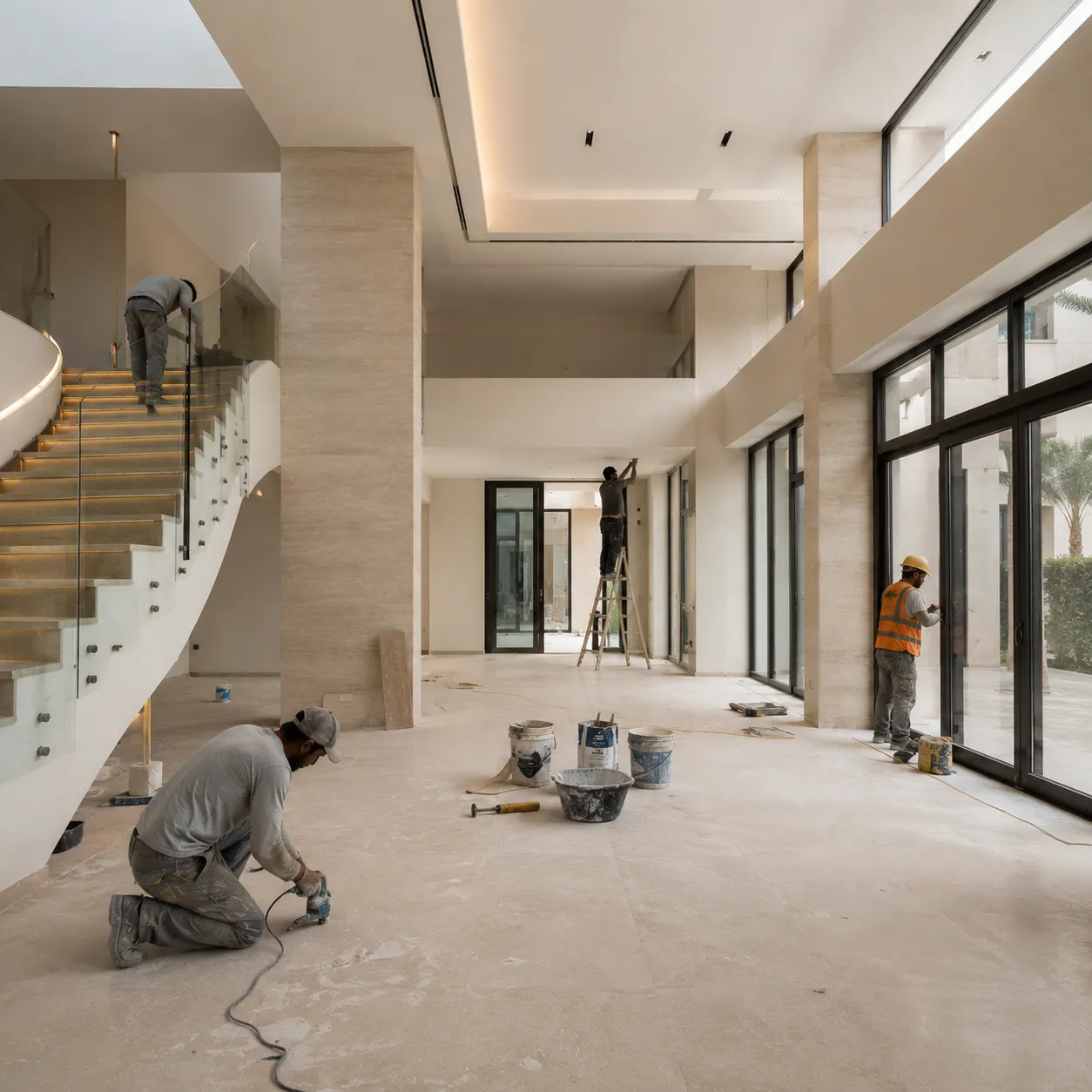
Finishes, Inspection and Completion
Review finishes on site, not from a chart
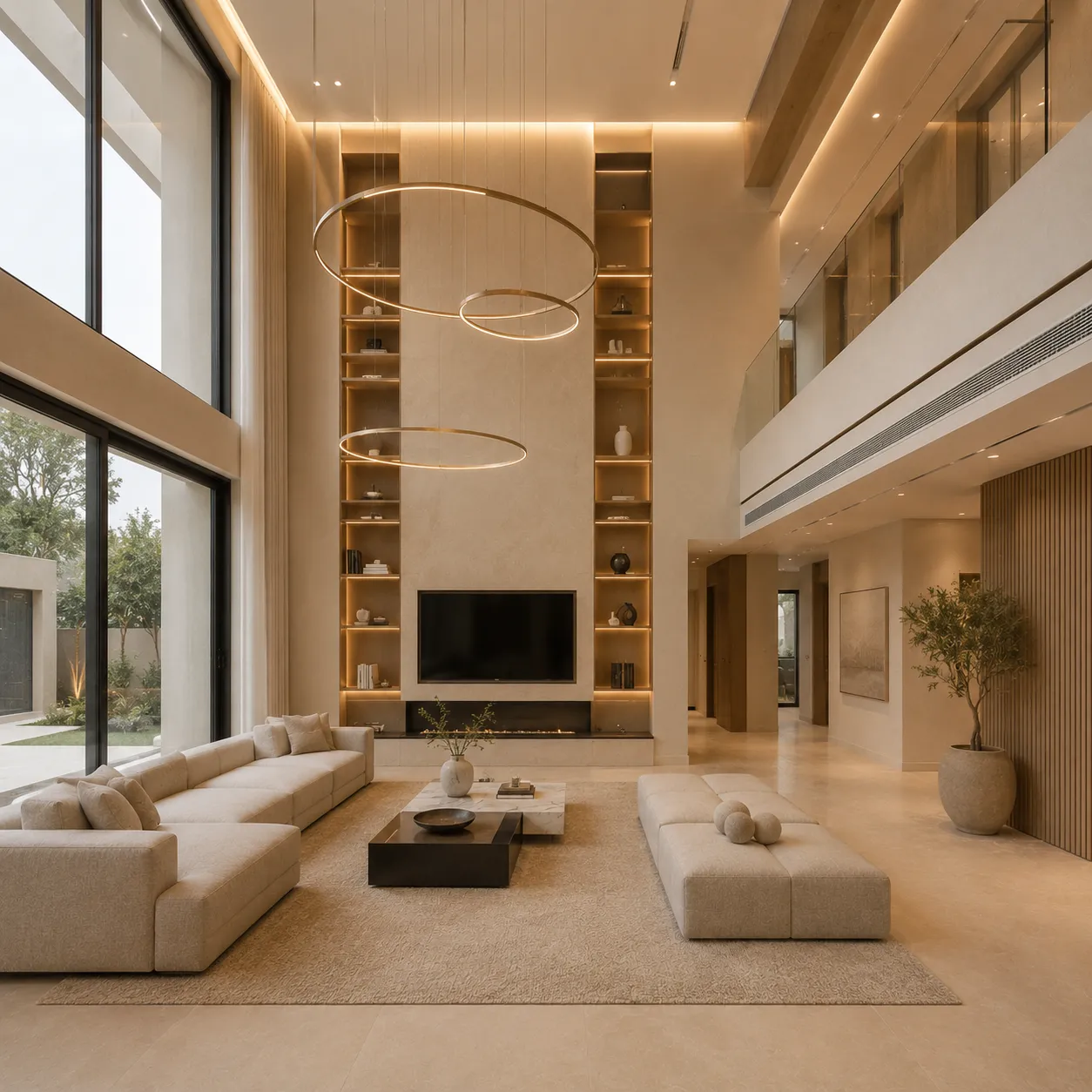
Under daylight and the intended lighting temperature, so stone, timber and paint read the same room to room.
Let joinery be measured after surfaces are final
Units made from drawings alone are the usual reason something arrives out of tolerance.
Inspect zone by zone
A villa is too large to check in one pass. Alignment on tiles, doors and joinery, room by room.
Test everything that was changed
Every socket, switch, tap and drain across both floors that formed part of the scope.
Close the snag list before moving back
Corrections completed and re-checked, not carried into your first month living there.
Keep the references and spares
Paint codes, tile batches, appliance documents and spare stock. Matching a batch two years later is often impossible.
For the full stage order behind this checklist, see our villa renovation guide.
Frequently Asked Questions
What delays villa projects most often?
Community approvals started late, finish selections left open, long-lead stone and joinery, and conditions discovered on opening up that were never budgeted for.
Do I need an NOC?
That depends on your community and the type of work. Many developments require contractor documents, a permit or an NOC. Requirements are checked during planning, and the decisions rest with the community management.
Should I renovate the whole villa at once?
If the villa is empty, usually yes — phasing re-mobilises the same trades and repeats the same protection. Phasing helps you stay in the house or spread payments, not lower the total.
Can external works run alongside the interior?
Often yes, and outdoor power and lighting are far cheaper to run while the villa is already open. What is included outside should be written into the scope from day one.
Where should I never cut the budget?
Waterproofing, substrate levelling and paint preparation. All three are invisible when done right and expensive to correct when they aren't.
Start with a Proper Scope
Send the location, size and condition, and which parts you want changed. We arrange a site visit, inspect the villa and give you a written scope with the stage sequence behind it.