
The mistakes that cost the most on an apartment renovation are almost never made on site. They are made weeks earlier — in a scope that was never written down, a material chosen too late, or a building rule nobody checked. Work through this list before you start, then come back to it at each stage.
Part One — Before You Start
Decide what problem you are solving
Preparing to move in, fixing a layout that never worked, or getting the unit ready to rent. Each one leads to a different scope, and the answer changes what is worth spending on.
Check the building's rules first
Permits, NOC, working hours, lift bookings and debris disposal. These shape the programme more than most owners expect, and approval rests with the building or property manager rather than with your contractor.
Get a measured survey
A price given before anyone has seen the apartment is a placeholder. It will move once work starts.
Insist on a written scope
What is included, what is excluded, and the work sequence. A lump sum with nothing behind it cannot be compared against another quotation or disputed later.
Compare quotations like for like
Same bathrooms, same MEP changes, same finish standard. A cheaper number is usually just a narrower scope.
Hold a contingency
Set money aside for what the walls reveal. Owners who plan for it treat a discovery as a decision; owners who don't treat it as a crisis.
Settle every finish before day one
Changing a tile on paper costs nothing. Changing it mid-programme affects sequence, delivery and often work already completed.
Plan where you will live
And where the furniture goes. A full renovation involving demolition and MEP is difficult to live through.
Before you compare quotations
Get an indicative range for your own apartment first, so you know what a realistic number looks like.
Try the Cost CalculatorPart Two — During the Work
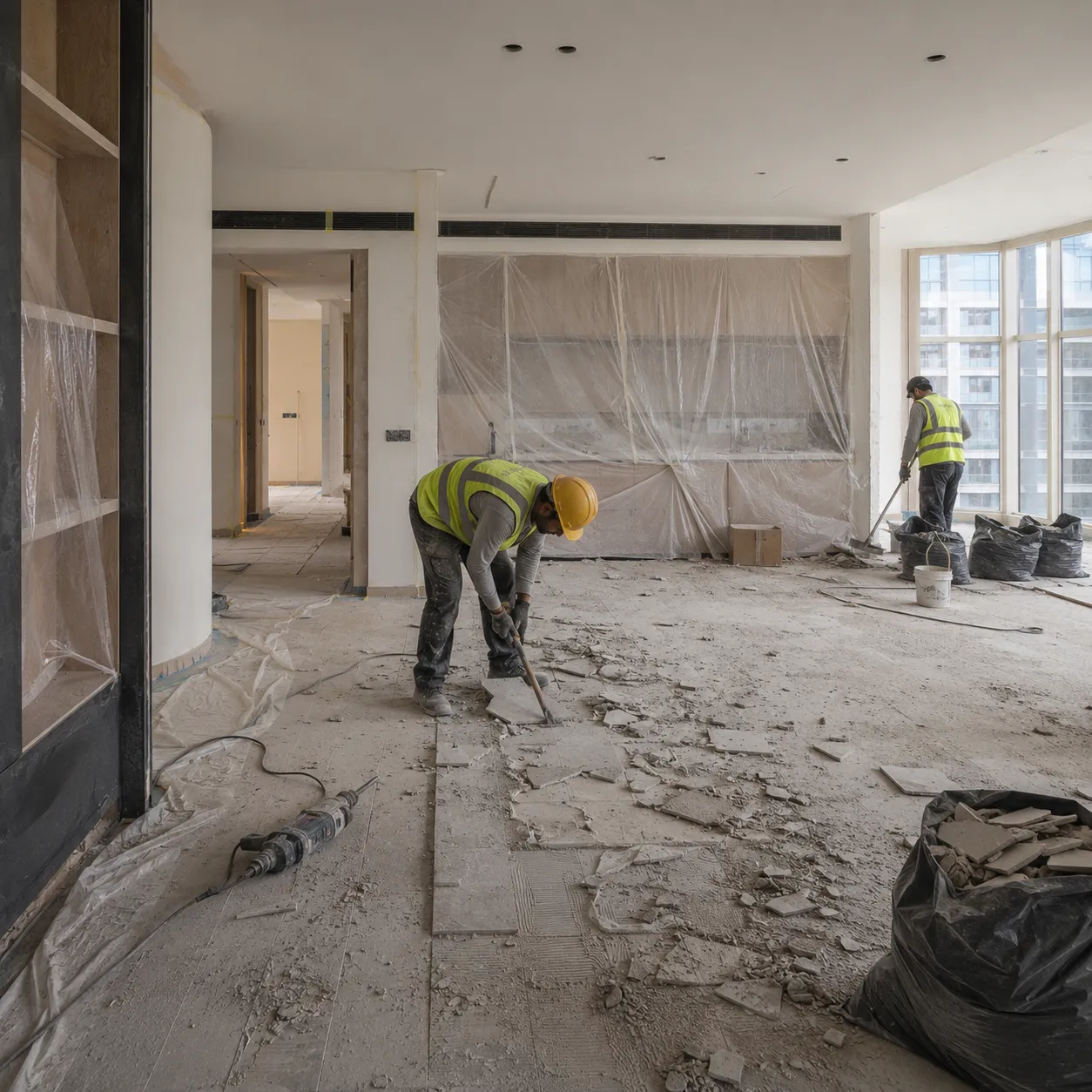
Confirm protection is in before demolition
Retained surfaces covered, work zones defined, and anything being kept clearly marked so it isn't stripped by mistake.
Walk the apartment after strip-out
This is when hidden conditions appear — old waterproofing, uneven screed, redundant pipework. Agree the cost implication before the affected work continues, not at the end.
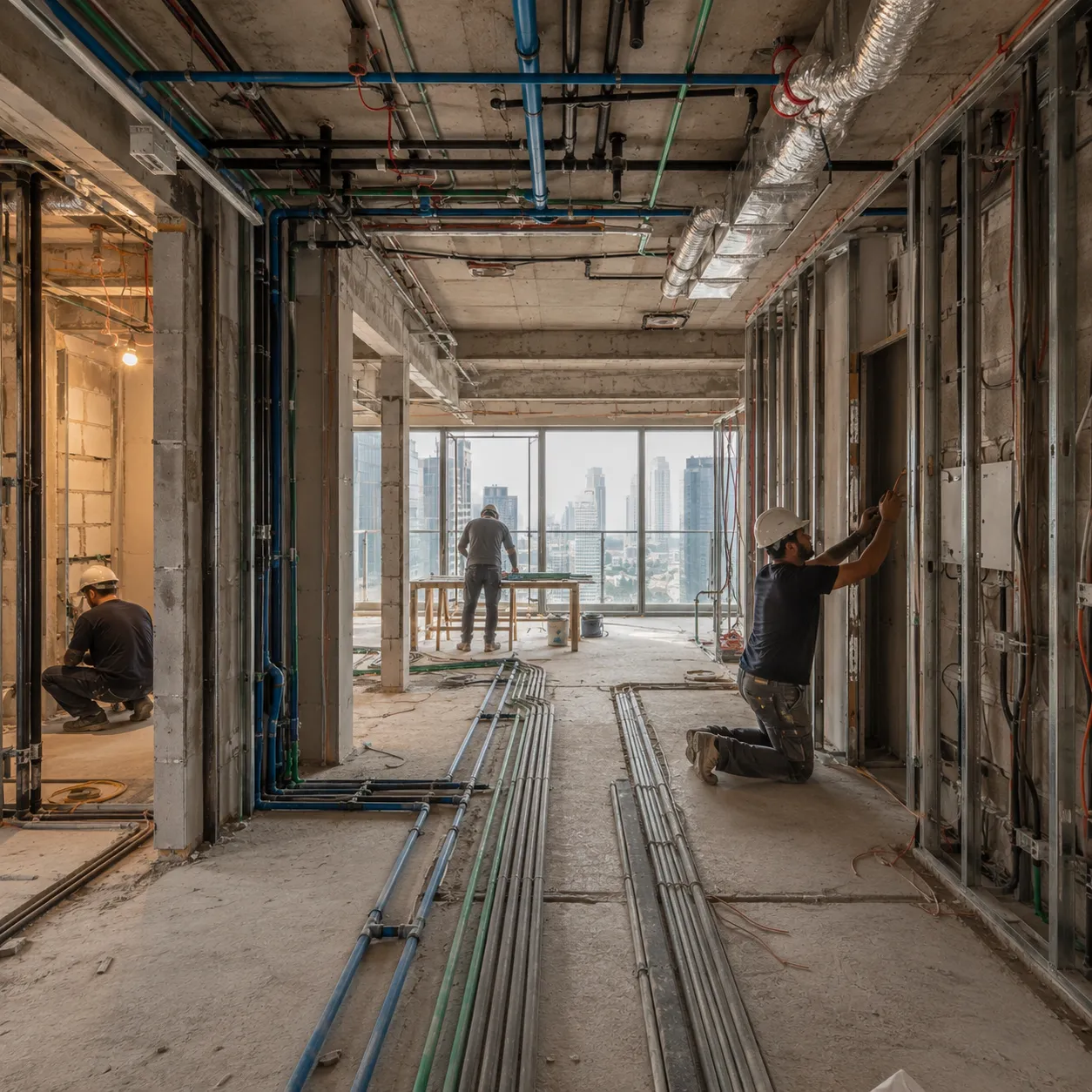
See the MEP before it's closed
Socket heights, lighting points and waste positions. Once tiling and ceilings close over them, changes mean opening finished work.
Check waterproofing before tiling
Damp patches and slow drains a year later almost always trace back to this being rushed.
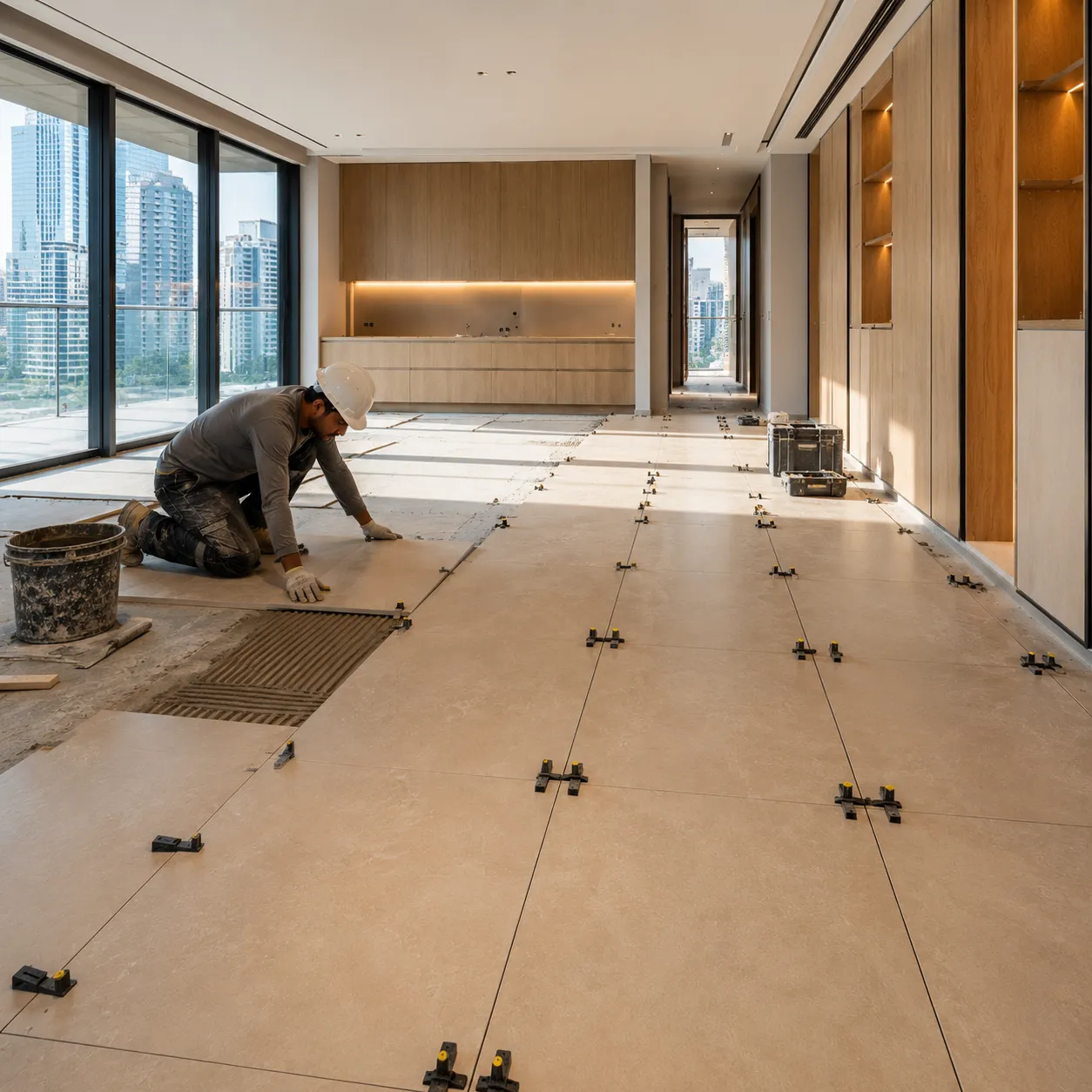
Confirm the tile set-out before laying
Starting line, joint direction and substrate levelling. Large-format tile shows every deviation in the base beneath it.
Let joinery be measured on site
Kitchens and wardrobes ordered from drawings alone are why units arrive out of tolerance.
Don't accept thin paint preparation
Filling and sanding take longer than the topcoats, and they decide how the walls look under evening light.
Record every change in writing
Verbal variations are the most common source of disputes at the end of a project.
One team, every trade
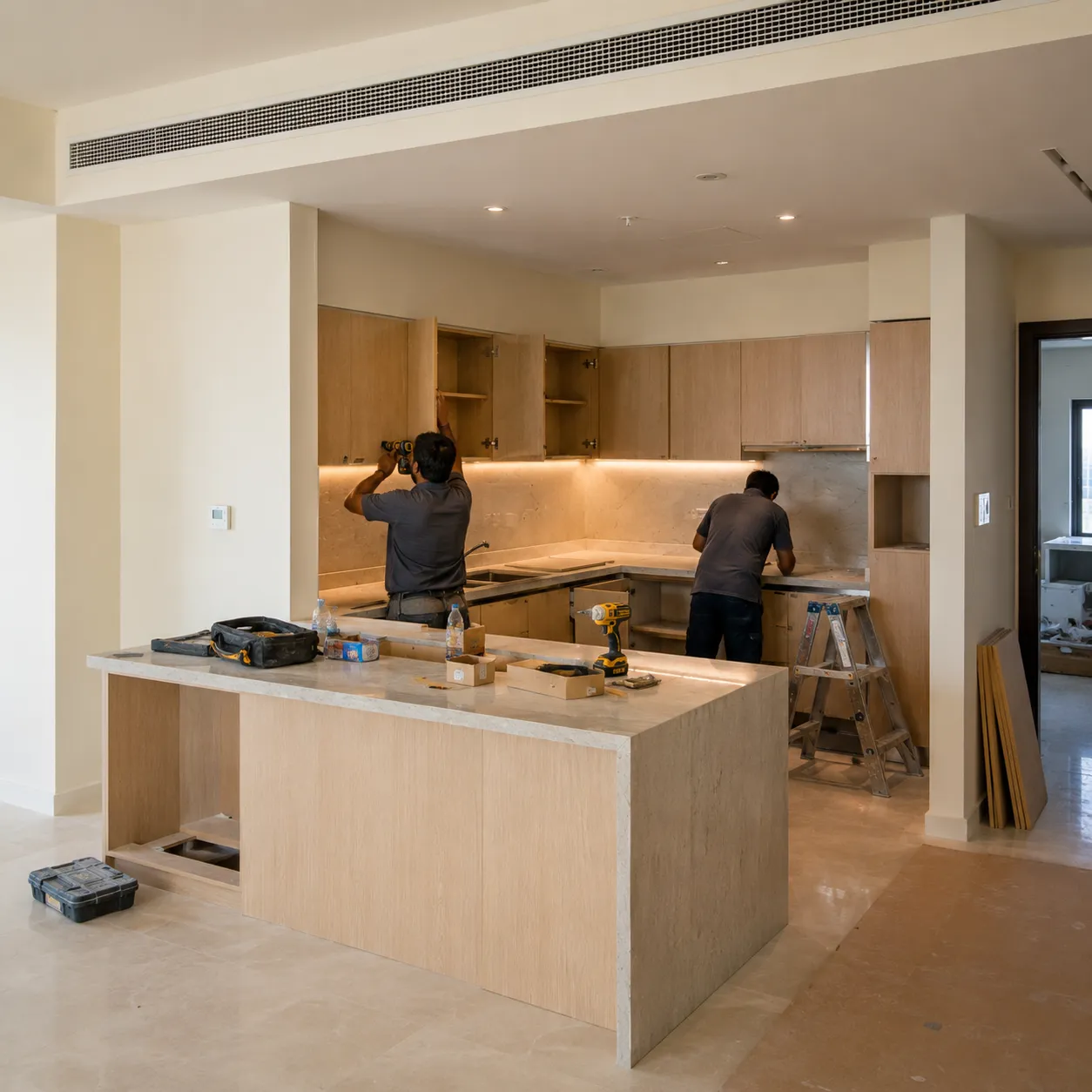
Demolition, MEP, flooring, joinery and painting handled as a single package — one point of contact instead of five subcontractors to chase.
Browse Apartment ServicesPart Three — Before You Accept Handover
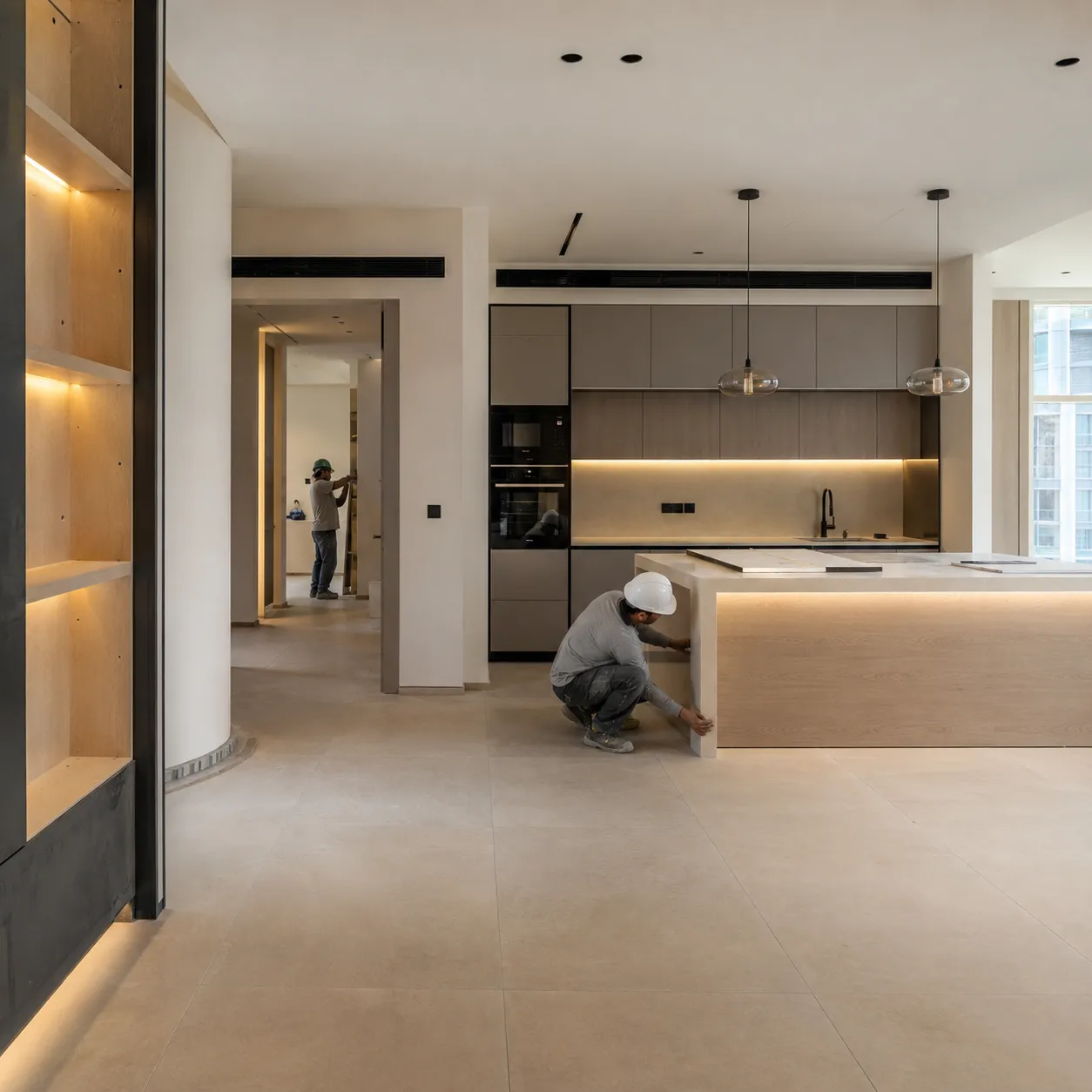
Inspect room by room, not in one pass
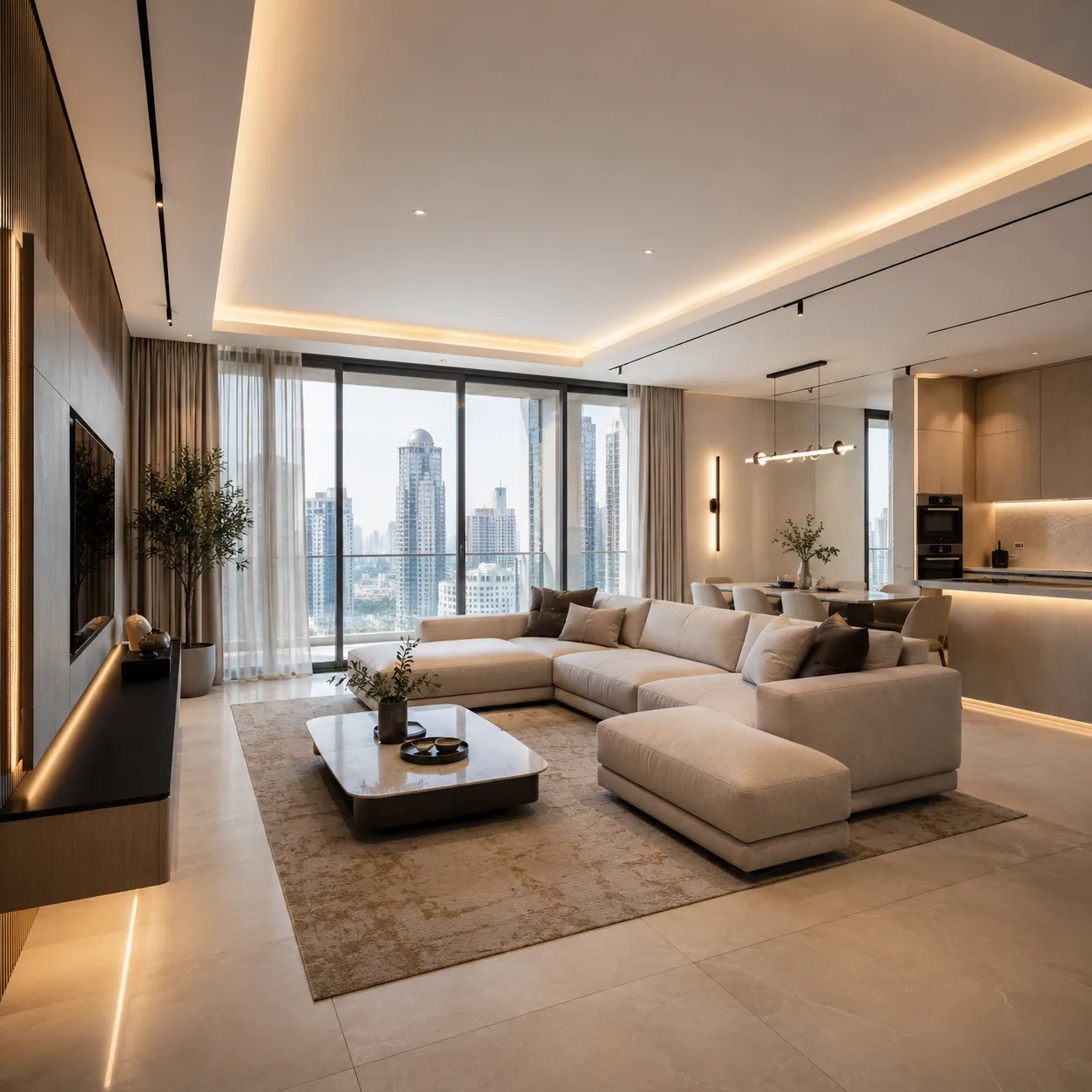
Tiles, doors and joinery alignment, and the finish on every wall under the lighting you will actually use.
Test what was changed
Every socket, switch, tap and drain that formed part of the scope.
Get the snag list closed first
Corrections completed and re-checked before you move in. That is the practical difference between a finished job and an almost finished one.
Confirm cleaning is complete
Construction residue off every surface, glass and fitting — not just the floors.
Collect the details you'll need later
Paint colours and codes, tile references, appliance documents, and how any installed items operate.
Keep spare tiles and paint
Matching a batch two years later is difficult and sometimes impossible.
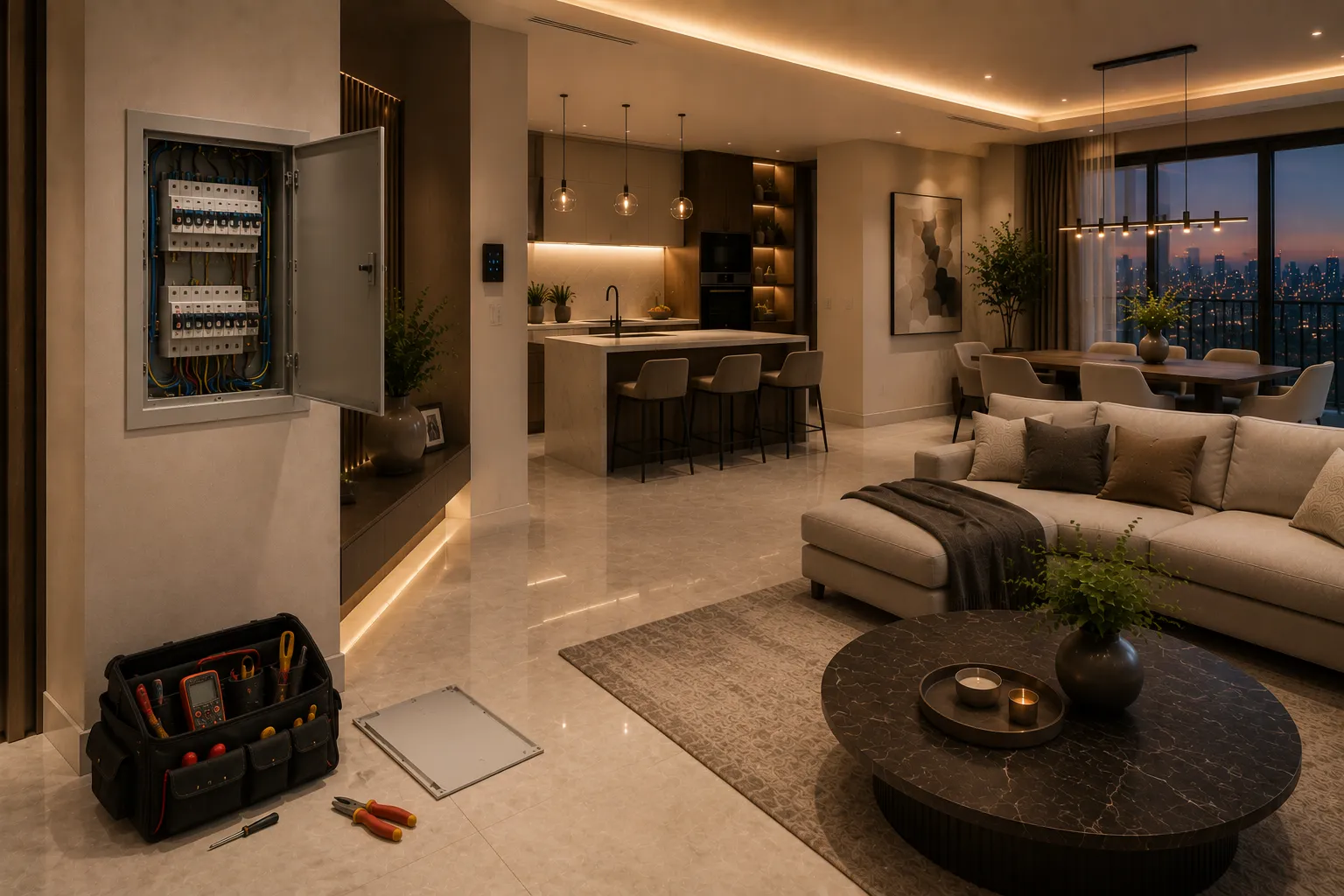
For the stage order behind this checklist, see our apartment renovation timeline. For what it costs, see the apartment renovation cost guide.
Frequently Asked Questions
What's the single most common mistake?
Starting without a written scope. Everything downstream — comparing quotations, handling variations, agreeing what "finished" means — depends on it existing.
How do I choose between contractors?
Compare what each scope actually covers before comparing totals, ask how variations are handled, and check that MEP is priced properly rather than assumed.
When should I choose my materials?
Before the site starts, with long-lead items identified first. Made-to-order worktops and joinery are the usual cause of an idle site.
Where is it safe to save money?
Keeping existing kitchen and bathroom positions, simplifying the ceiling design, and phasing joinery. Never on waterproofing, substrate levelling or paint preparation.
Do I need a permit or NOC?
It depends on the building and the work. Many towers require contractor documents, a permit or an NOC and apply working-hour rules. Check with your building early — approval rests with them.
Start with a proper scope
Send us the location, number of rooms and the work you are considering. We visit the apartment, inspect the existing services, and give you a written scope you can hold anyone to — free, and with no obligation.
Renovating something else?
We have the same checklist for every property type we work on.